In the heart of Orthodox Christianity, one icon stands as a testament to divine wisdom and spiritual guidance. This isn’t just another religious artwork – it’s a window into centuries of faith, devotion, and the enduring power of saintly intercession. The image of Saint John Chrysostom has become more than mere decoration. It’s a living symbol that speaks to believers across generations, offering comfort, inspiration, and spiritual direction.
When we think of icons in Orthodox Christianity, we often picture the familiar faces of saints and biblical figures. But there’s one particular icon that holds a special place in the hearts of many faithful believers – the icon of Saint John Chrysostom. This isn’t simply a painting or carving that hangs on a wall. It’s a bridge between the earthly and heavenly realms, a source of strength during difficult times, and a reminder of the power of pure spiritual teaching. What makes this icon so significant? How did it evolve from a simple artistic creation into something that continues to inspire millions today?
The Life and Legacy of Saint John Chrysostom
Saint John Chrysostom lived in the late 4th and early 5th centuries, serving as one of the most influential theologians and preachers in Christian history. His name means ‘golden mouth,’ which perfectly captured his ability to speak with eloquence and power. He was known for his fierce dedication to social justice and his unwavering commitment to helping the poor and marginalized. His sermons were so moving that people would gather from miles away just to hear him speak. What many don’t realize is that his influence extended far beyond his lifetime. Even after his death, his teachings continued to shape Christian thought and practice. The icon that depicts him today carries forward this legacy, reminding believers of his powerful message about compassion, truth, and spiritual purity. His life story is one of courage in the face of adversity, and his icon serves as a visual representation of that bravery.
The Origins of the Icon’s Creation
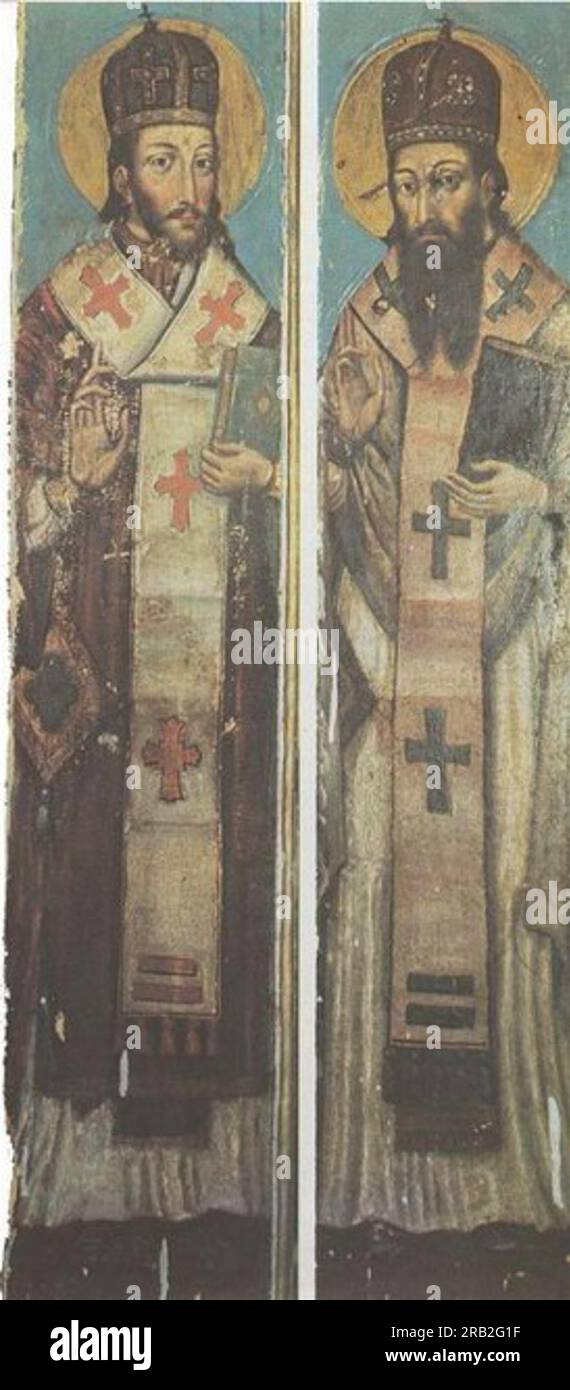
The first icons of Saint John Chrysostom appeared in the Byzantine Empire during the 6th century, shortly after his canonization. These early depictions were created by skilled artists who understood that they weren’t merely creating art – they were crafting sacred vessels for prayer and meditation. The process wasn’t simple or quick. Artists had to study his life stories, his teachings, and his personality to capture the essence of who he was. Many of these early icons show him with his characteristic features: the gentle eyes that seemed to hold infinite wisdom, the thoughtful expression that spoke of deep contemplation, and the hands that were always ready to serve others. The style of these early icons was heavily influenced by Byzantine traditions, emphasizing spiritual rather than physical realism. This approach meant that viewers could focus on the deeper meaning rather than just surface appearance.
Iconographic Traditions and Symbolism
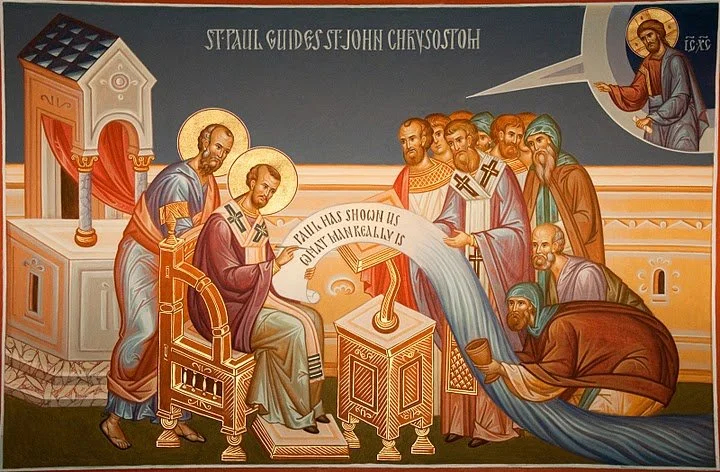
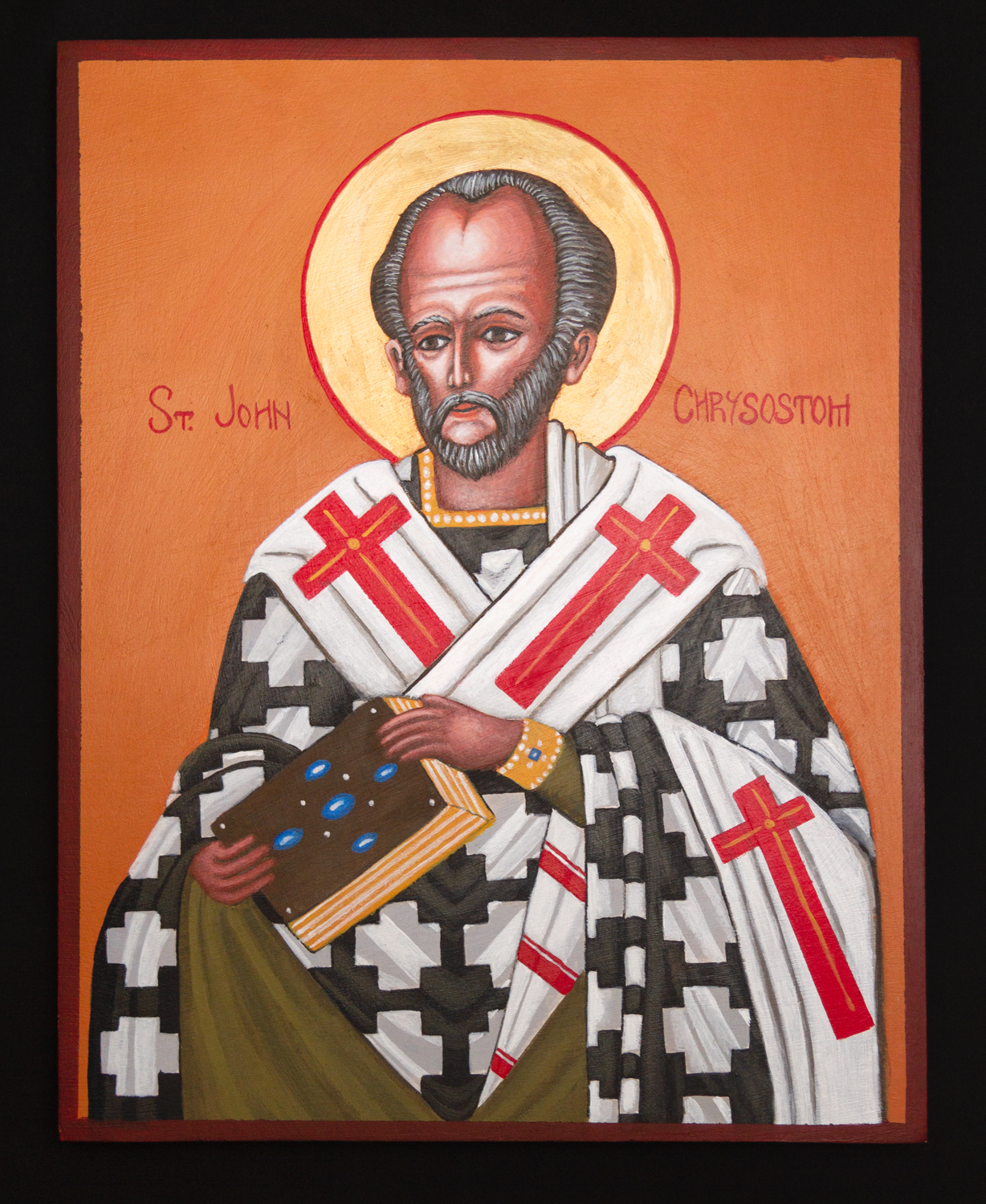
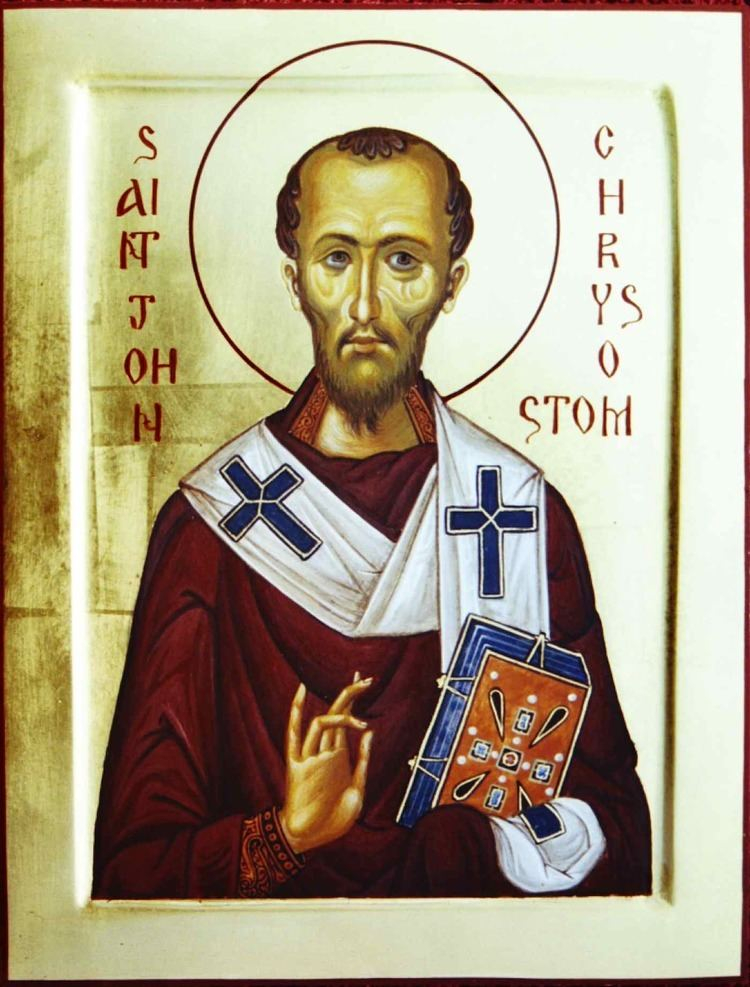
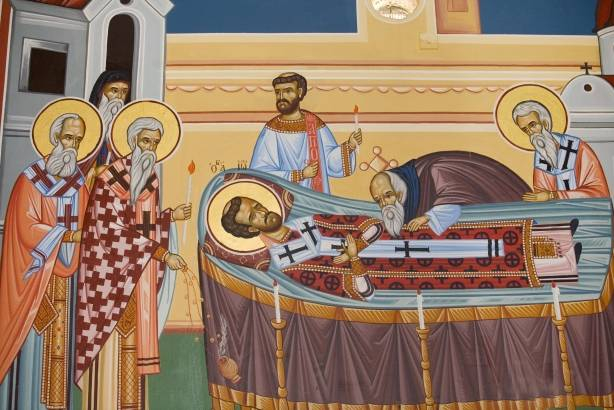
Each element in Saint Chrysostom’s icon carries deep meaning within Orthodox tradition. His distinctive hairstyle and beard represent his ascetic lifestyle and connection to the early Church fathers. The books he holds symbolize his role as a great teacher and writer. His simple clothing reflects his humility despite his high spiritual status. The background often includes elements like crosses or rays of light that represent divine illumination. What’s fascinating is how different regions developed their own variations while maintaining core symbolic elements. Some icons show him with a dove, representing the Holy Spirit, while others feature him with a scroll or parchment, highlighting his role as a writer and preacher. These details aren’t arbitrary – they’re carefully chosen to communicate specific theological truths about his life and work.
The Transformation into Spiritual Beacon
Over time, the icon evolved beyond its original artistic purpose. It began to take on a life of its own, becoming a focal point for prayer and spiritual reflection. Many believers report feeling a deep sense of peace when looking at his icon, especially during times of personal struggle or uncertainty. The transformation happened gradually, as countless individuals found comfort in his image. Churches throughout the Orthodox world began displaying these icons prominently, often in areas where people gathered for communal prayer. The icon became a gathering point for spiritual seekers, a place where they could connect with something greater than themselves. This shift from art object to spiritual guide represents a fundamental change in how people relate to religious imagery in Orthodox practice.
Modern Relevance and Contemporary Devotion
Today, Saint Chrysostom’s icon continues to draw people from all walks of life. In our fast-paced world, his image offers a moment of stillness and reflection. Many modern believers find his message particularly relevant when dealing with issues of social justice, inequality, and moral responsibility. His emphasis on caring for the less fortunate resonates strongly with contemporary concerns. The icon has also inspired numerous modern interpretations and adaptations, showing how ancient spiritual symbols can remain fresh and meaningful. From small home altars to grand cathedral displays, his icon appears in various forms and sizes. What’s remarkable is how this single image can unite people across cultures and generations, creating a shared spiritual experience.
Practical Applications and Daily Devotion
For those who wish to incorporate Saint Chrysostom’s icon into their daily spiritual practice, there are several meaningful approaches. Many believers begin each day by looking at his icon, using it as a way to center themselves before starting their activities. Others use it as a meditation aid, focusing on his gentle expression to cultivate inner peace. During difficult times, some find solace in praying before his icon, asking for guidance based on his example of courage and compassion. The icon can also serve as a reminder to practice generosity and kindness toward others, reflecting the values he championed throughout his life. Whether displayed in a home chapel, office space, or personal prayer area, the icon becomes part of one’s spiritual environment, constantly reminding them of higher purposes and values.
The journey of Saint John Chrysostom’s icon from a historical portrait to a spiritual beacon illustrates the profound power of religious art in Orthodox Christianity. What began as a simple depiction of a holy man evolved into something much more significant – a living symbol that continues to touch hearts and minds across generations. This transformation shows us how art can transcend its physical form to become a vessel for divine communication. Today, whenever someone looks upon his icon, they’re not just seeing a painted image. They’re connecting with centuries of faithful believers who have found strength, wisdom, and guidance through this same spiritual symbol. The icon remains a testament to the enduring relevance of saintly lives and the timeless nature of spiritual truth.
[sps_html tag=”img” src=”https://cdn.theartssection.com/wp-content/uploads/2025/11/life-of-st-john-chrysostom-st-volodymyr-cathedral-of-toronto-regarding-saint-chrysostom-icon.jpg” alt=”Life Of St. John Chrysostom — St. Volodymyr Cathedral Of Toronto regarding Saint Chrysostom Icon” style=”width: 100%; height: auto;”]
[sps_html tag=”img” src=”https://cdn.theartssection.com/wp-content/uploads/2025/11/icon-of-st-john-chrysostom-and-st-basil-the-great-from-the-village-of-inside-the-evolution-of-saint-chrysostom-iconography-through-centuries.jpg” alt=”Icon Of St. John Chrysostom And St. Basil The Great From The Village Of … inside The Evolution of Saint Chrysostom Iconography Through Centuries” style=”width: 100%; height: auto;”]
[sps_html tag=”img” src=”https://cdn.theartssection.com/wp-content/uploads/2025/11/john-chrysostom-alchetron-the-free-social-encyclopedia-with-the-evolution-of-saint-chrysostom-iconography-through-centuries.jpeg” alt=”John Chrysostom - Alchetron, The Free Social Encyclopedia with The Evolution of Saint Chrysostom Iconography Through Centuries” style=”width: 100%; height: auto;”]
[sps_html tag=”img” src=”https://cdn.theartssection.com/wp-content/uploads/2025/11/orthodox-christianity-then-and-now-a-14th-century-description-of-the-regarding-the-evolution-of-saint-chrysostom-iconography-through-centuries.jpg” alt=”Orthodox Christianity Then And Now: A 14Th Century Description Of The … regarding The Evolution of Saint Chrysostom Iconography Through Centuries” style=”width: 100%; height: auto;”]
[sps_html tag=”img” src=”https://cdn.theartssection.com/wp-content/uploads/2025/11/jeremy-johnsons-iconography-st-john-chrysostom-pertaining-to-the-evolution-of-saint-chrysostom-iconography-through-centuries.jpg” alt=”Jeremy Johnson's Iconography: St. John Chrysostom pertaining to The Evolution of Saint Chrysostom Iconography Through Centuries” style=”width: 100%; height: auto;”]