
Have you ever stopped to really look at a sunflower? Or wondered why pinecones look the way they do. Nature has a funny way of making things that look purely artistic turn out to be deeply mathematical. It turns out that every petal, leaf, and stem is following a hidden blueprint.
We often think of math as cold numbers on a page. Yet, the natural world proves it can be breathtakingly alive. When we walk through a garden today in 2026, we are actually strolling through a living gallery of geometry and algebra. Let us dive into how numbers shape the greenery we love.
The Secret Code of the Fibonacci Sequence
Numbers rule the plant kingdom in ways most folks never realize. Take the famous Fibonacci sequence, where every number is the sum of the two before it. Plants use this exact sequence to arrange their leaves so every single one gets maximum sunlight. It is a brilliant trick of natural engineering.
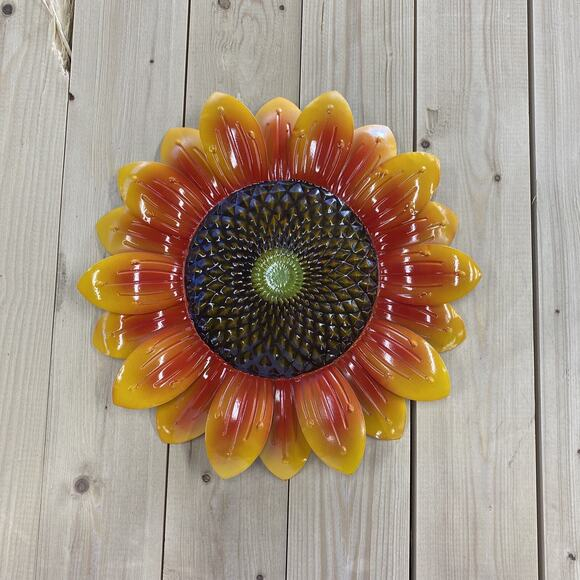
If you count the spirals on a pinecone or a pineapple, you will almost always find Fibonacci numbers. Sunflowers pack their seeds using this pattern to squeeze the maximum amount into a tight space. Mother Nature is the ultimate minimalist designer.
The Magic of the Golden Ratio
Beyond simple counting, plants adore the golden ratio. This is a special number, roughly 1.618, that creates visually pleasing proportions. Artists and architects have copied it for centuries, but flowers mastered it long before humans picked up a pencil.
When flower petals grow, they do not just crowd together randomly. They space themselves out using golden angles. This stops upper leaves from blocking light to the lower ones. Beauty and smart survival go hand in hand here.
Symmetry in Petals and Blooms
Symmetry is everywhere in botany. Most flowers show radial symmetry, meaning you can slice them through the center and get identical halves. Think of a simple daisy or a bright daffodil. It pleases our eyes because our brains love order and balance.
Some plants go for bilateral symmetry, like orchids. They have a distinct left and right side, acting like landing pads for bees and other buzzing insects. Math is not just about looks here; it is an evolutionary invitation for pollinators.
Fractals in Ferns and Romanesco Broccoli
Ever looked closely at a fern frond? Each little piece looks just like the whole plant, only smaller. That is a fractal, a geometric shape that repeats itself at different scales. Romanesco broccoli is another wild example, looking like an alien staircase made of tiny geometric cones.
This repeating pattern helps plants maximize their surface area. It is an efficient way to grow big without wasting energy. Plus, let us be honest, it looks amazingly cool.
Spirals and Phyllotaxis in Stem Growth
Leaves do not just sprout haphazardly from a stem. They follow specific angles in a study known as phyllotaxis. By twisting as they climb upward, plants ensure they do not cast shadows on themselves.
Think of it like a staircase winding up a lighthouse. Each step is turned just enough to catch the morning rays. It is pure math at work in your backyard garden.
Today, designers and architects are borrowing these exact botanical math tricks. By studying how plants handle light and space, human creators are building better solar panels and stunning eco-friendly buildings. Nature remains the best teacher we have.
Next time you are out for a walk, take a closer look at the local flora. You are not just seeing pretty colors. You are reading an ancient mathematical textbook written in green.
Math and botany are truly two sides of the same coin. From the spiral of a rose to the branching of a tree, numbers give shape to beauty. It reminds us that there is a deep, hidden order to the chaotic world we live in.
So, take a moment to appreciate the geometry hiding in your garden. The universe has a remarkable way of solving complex puzzles with simple, elegant grace. And that is something worth smiling about.