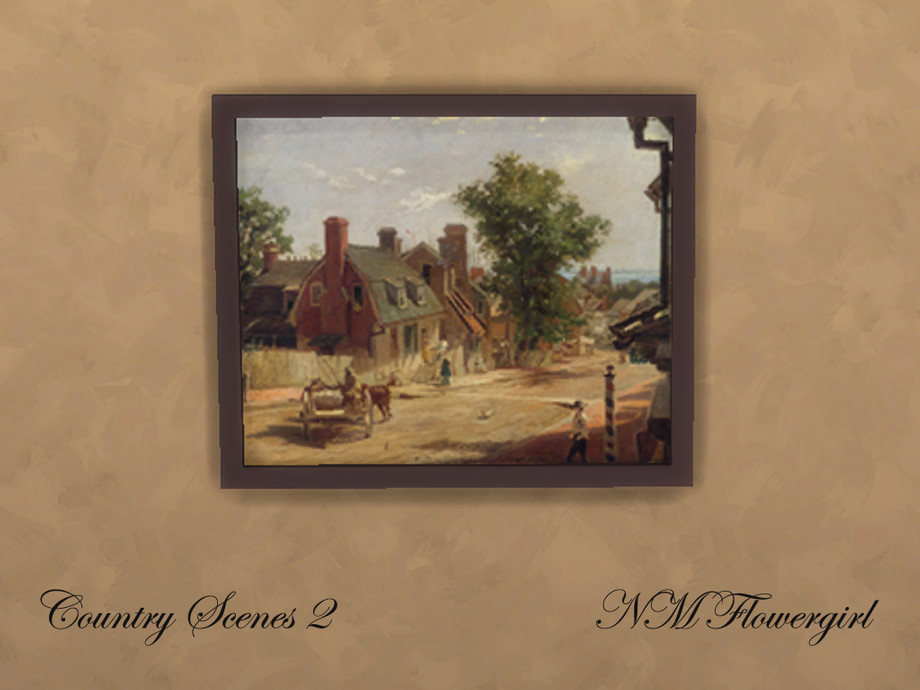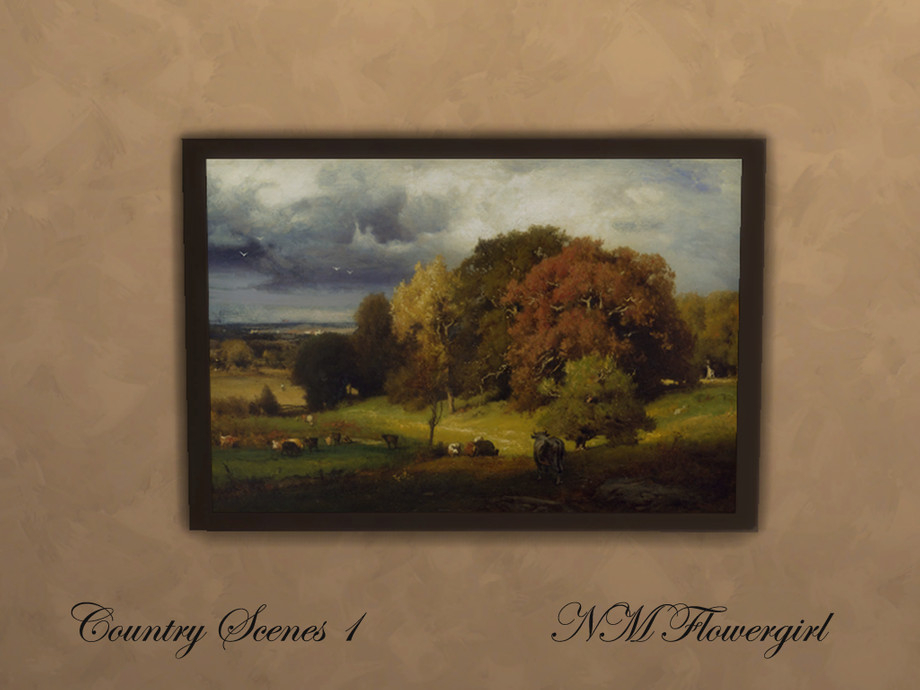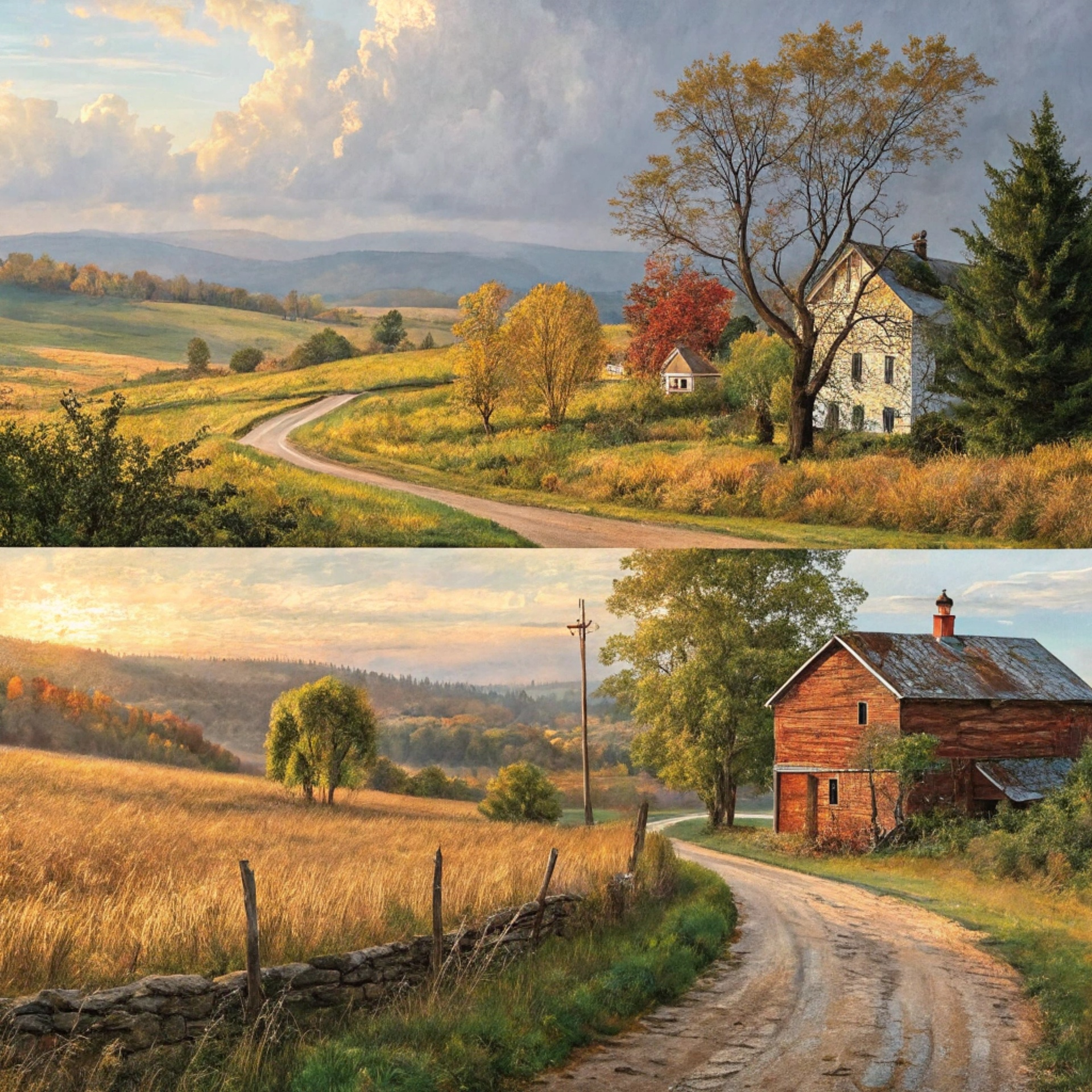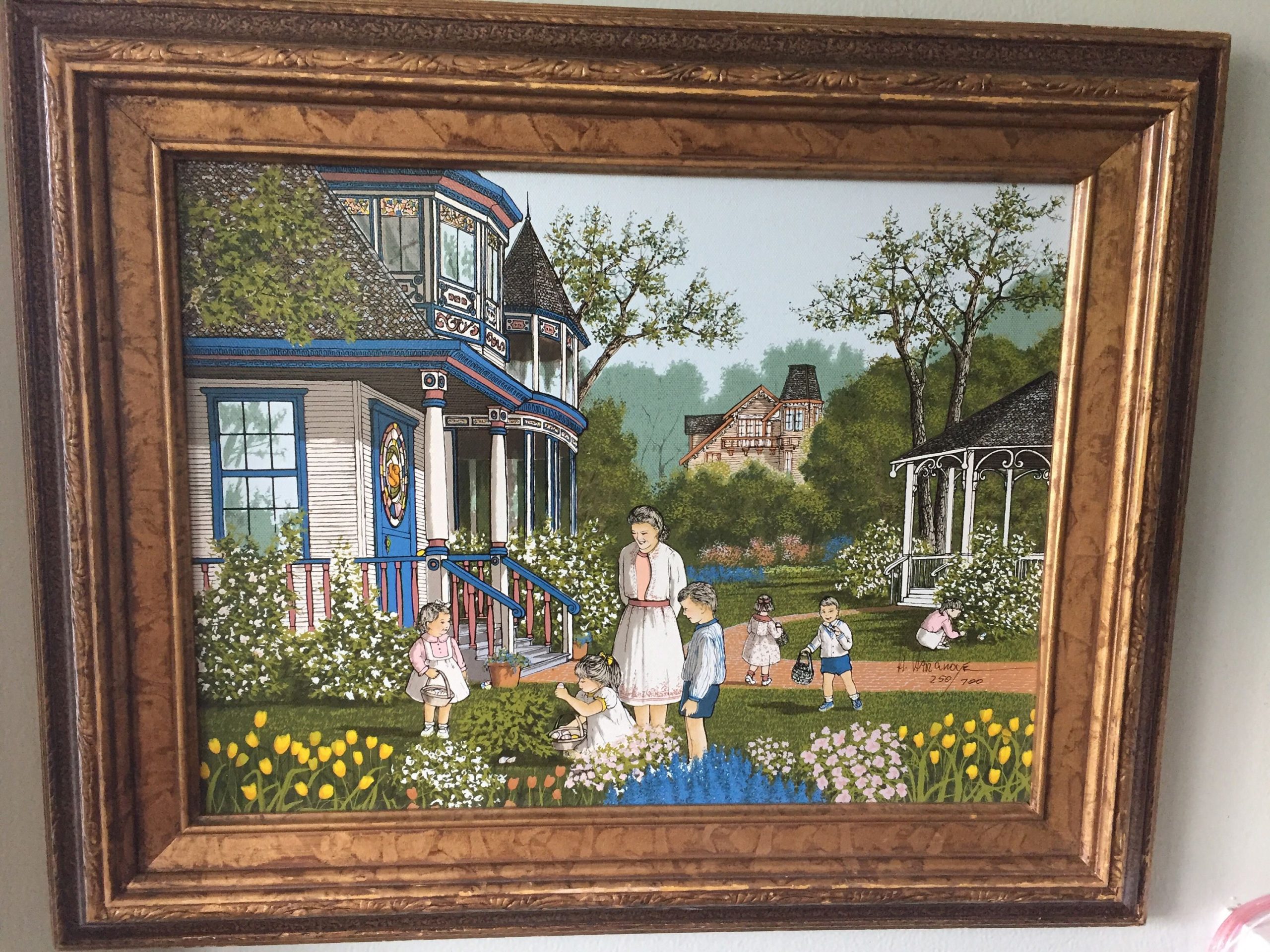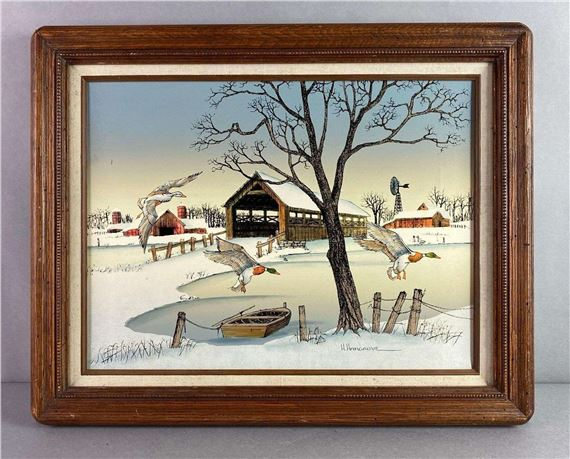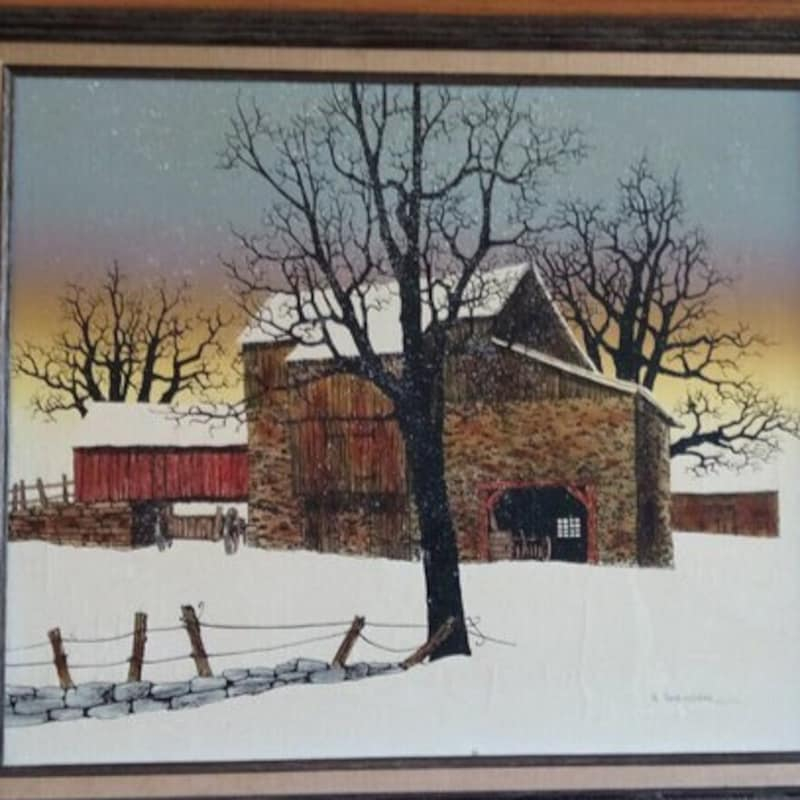
Sunlight slants through an aged multi-pane window, casting long, amber shadows across a floorboards-and-oak interior. A half-empty glass of ruby-red wine sits next to an overflowing wooden crate of dark-skinned grapes, their skins dusted with the pale bloom of harvest. Outside, rolling hills under a soft Californian sky beckon the eye, promising quiet afternoons far removed from the digital churn. This is the exact tactile universe captured in the celebrated Sunny Hill Winery composition—an artwork that has spent decades anchoring living rooms, rural kitchens, and wine-tasting rooms across the country.
For many, this specific visual piece acts as a portal. It is not merely a rendering of a rural storefront or a vineyard shed; it is a meticulously constructed emotional landscape. Every brushstroke functions as an invitation to slow down, to notice the grain of aged timber, the heavy sheen of ripening fruit, and the deep, silent serenity of a countryside working day. Understanding why this composition resonates so deeply requires looking past the frame and examining how human psychology, artistic tradition, and the romance of viticulture intersect.
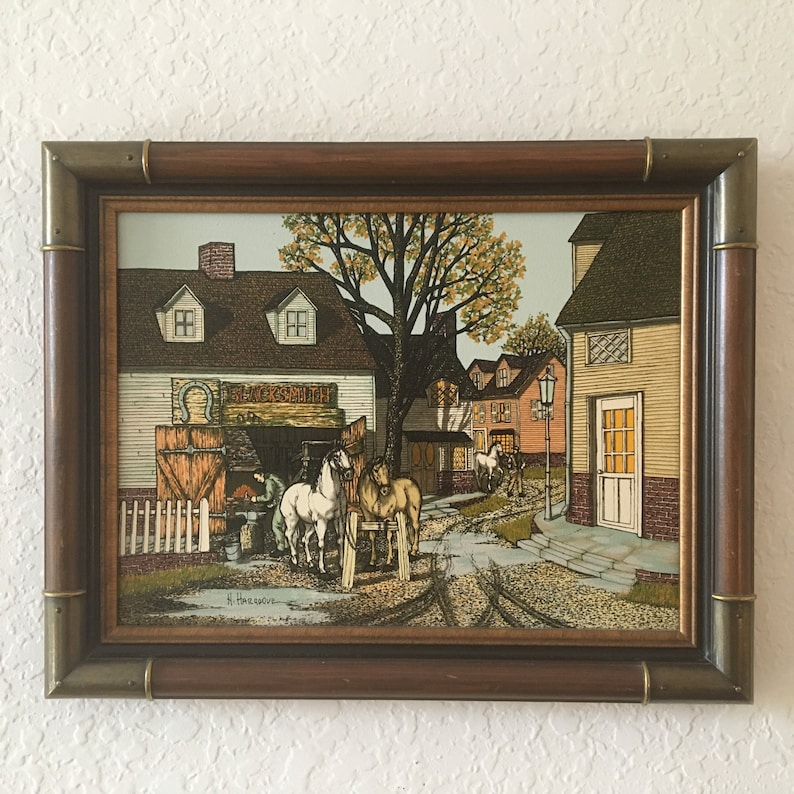
The appeal of pastoral artwork tied to winemaking goes deeper than simple wall decor. It taps into a collective yearning for authenticity, tactile labor, and a simpler rhythm of existence. Whether people encounter the scene through prints of H. Hargrove’s nostalgic canvases or seek out physical vineyards that mirror this aesthetic, the desire remains identical: a hunger for places "grown here," where products are touched by human hands rather than churned out by anonymous automated lines. This exploration unpicks the physical, psychological, and artistic anatomy of that rustic charm, offering a definitive guide to finding genuine inspiration within the Sunny Hill Winery composition and the broader world it represents.
The Visual Anatomy of Pastoral Nostalgia in Wine Art
To unpack why the Sunny Hill Winery composition works so well visually, one must look at its structural elements. Created by artists like H. Hargrove—who famously transitioned from painting the sun-drenched Italian countryside of his youth to documenting the vast, quiet poetry of the American rural landscape—these works rely on deliberate compositional framing. The viewer is almost never standing outside the scene as a detached observer. Instead, the viewer is positioned inside, looking out through an open window or past a stack of heavy oak barrels. This threshold framing creates an immediate psychological bridge, inviting the audience to step across the boundary from hectic modern life into a zone of deep, uninterrupted calm.
Color theory plays a massive role in establishing this atmosphere. The palette leans heavily into earthy Siennas, rich burgundies, warm ochres, and muted golds. These aren’t the neon brights of digital screens; they are pigments drawn directly from the soil, the vine, and the cooper’s workshop. When light strikes these tones in the painting, it creates a visual warmth that lowers human heart rates. In design terms, this is intentional. Warm, desaturated earth tones communicate safety, permanence, and historical continuity. They whisper that things have been this way for a long time, and they will likely remain this way long after today’s worries fade.
Texture is another masterstroke of this specific artistic tradition. Even when rendered flat on canvas, the mind can practically feel the rough, splintered grain of the oak wine casks and the cold, smooth glass of the decanter. This relies on what perceptual psychologists call tactile transposition—the brain’s ability to translate visual cues into physical sensations. By anchoring the composition in heavily textured objects (staves of wood, iron barrel hoops, stacked wooden crates, and dusty clusters of fruit), the artist grounds the ethereal beauty of the sunset in gritty, physical reality. Winemaking, after all, is not an abstract concept; it is dirt under the fingernails, sweat during the crush, and heavy lifting in damp cellars.
Translating Rural Romanticism into Everyday Living Spaces
Bringing the essence of the Sunny Hill Winery composition into a home or workspace requires more than simply hammering a framed print onto a drywall surface. It demands an intentional curation of environment that honors the philosophy of rustic design. True rustic charm is never about plastic imitation or manufactured distress; it relies on honesty of materials. Reclaimed lumber, wrought iron hardware, unglazed ceramics, and heavy woven textiles form the physical vocabulary of this aesthetic. When an interior echoes the elements found in Hargrove’s vineyard scenes, it shifts the entire emotional frequency of a room.
The integration of lighting is perhaps the most critical variable when attempting to recreate this atmosphere indoors. Modern LED downlighting with harsh blue hues will instantly shatter the illusion of a sun-warmed valley retreat. Practitioners of warm-interior styling rely instead on layered, low-kelvin illumination—typically bulbs registering between 2200K and 2700K. Placing lamps at varying heights, utilizing amber glassware to refract light, and maximizing natural daylight through bare or lightly curtained windows mimics the golden-hour glow so prevalent in classic vineyard art. The goal is to make the room feel as though it is perpetually resting in the late afternoon sun of a Napa or Ohio hillside.
Furthermore, physical objects within the space should tell a story of utility and time. Just as the barrels in the winery composition serve a dual purpose—holding fermenting juice while aging gracefully—every item in a rustic-inspired room should feel purposeful. Displaying antique corkscrews, heavy ceramic crocks, or wooden boards that show knife scars from years of use adds genuine patina. This physical honesty counters the ephemeral nature of modern disposable culture. It establishes a sanctuary of permanence where people can unplug, uncork a bottle, and reconnect with tangible reality.
Step-by-Step Methodology for Cultivating Vineyard-Inspired Serenity
Recreating the grounding energy of a historic winery setting in daily life involves a deliberate, step-by-step approach. This methodology moves beyond aesthetic decoration to touch upon lifestyle pacing, sensory engagement, and intentional space-making.
- Step 1 (Audit Your Sensory Environment): Begin by walking through your living or working space and identifying elements that generate cognitive fatigue, such as flickering digital displays, harsh overhead lighting, or synthetic materials. Replace high-intensity white bulbs with warm-spectrum lighting, and introduce organic textures like raw wood and linen to ground the space.
- Step 2 (Establish a Threshold Ritual): Emulate the window-framing perspective of the Sunny Hill composition by creating a dedicated transition zone between your active life and your resting space. This could be a comfortable armchair positioned near natural light, a porch corner, or a small tasting nook where phones and laptops are strictly prohibited.
- Step 3 (Curate Physical Touchpoints): Introduce objects that carry weight, history, and tactile feedback. Invest in well-crafted stoneware, heavy glassware, or wooden serving boards. When you interact with these items, practice mindfulness by focusing entirely on their physical properties—their temperature, balance, and texture.
- Step 4 (Engage in Slow Craft Practices): Connect directly with the philosophy of manual production by engaging in a hobby that requires patience and physical involvement, whether that involves baking artisan bread, tending a small herb garden, or learning the nuances of wine tasting and food pairing. Focus on processes where speed is sacrificed for quality.
- Step 5 (Anchor Your Space with Meaningful Art): Select visual focal points—such as landscape paintings, limited-edition vineyard prints, or photography that captures quiet natural moments—that serve as visual anchors. Let these pieces act as mental cues to pause, breathe, and reset your internal tempo throughout the day.
Common Pitfalls and Field-Tested Workarounds in Rustic Design
Attempting to capture the warmth and simplicity of a winery setting often leads people down a few well-worn design traps. Recognizing these mistakes prevents spaces from feeling like movie set clichés or cluttered antique shops.
- Pitfall 1 (Falling into the Theme Park Trap): Overloading a room with literal wine paraphernalia—such as neon wine signs, cork-filled glass jars, and mass-produced signs about drinking—turns a sophisticated space into a caricature. Workaround: Rely on subtle abstractions. Instead of explicit wine memorabilia, use authentic materials like reclaimed oak staves, neutral linen drapery, and artwork that captures the atmosphere of the landscape rather than commercial branding.
- Pitfall 2 (Sacrificing Comfort for Aesthetic Authenticity): Buying stiff, genuinely antique furniture that looks incredible in a painting but causes physical discomfort ruins the functional purpose of a living space. Workaround: Balance historical aesthetics with modern ergonomic engineering. Choose upholstered seating wrapped in high-performance textured fabrics like distressed top-grain leather or heavy cotton canvas that looks rustic while offering genuine physical support.
- Pitfall 3 (Cluttering Surfaces with Useless Knick-Knacks): Piling every available shelf with small decorative items in an attempt to look "country" creates visual noise that spikes cortisol levels. Workaround: Apply the principle of intentional curation. Every displayed object must either serve a practical function or hold deep personal resonance, leaving plenty of negative space to let the eye rest.
- Pitfall 4 (Ignoring True Natural Light Dynamics): Trying to simulate a sunlit vineyard in a north-facing basement room using standard bright white bulbs creates a cold, sterile environment. Workaround: Compensate for lack of natural light by using warm-toned paint palettes (creamy ivories, soft sages, or warm clays) and placing large mirrors opposite light sources to bounce and amplify the available illumination.
- Pitfall 5 (Treating Rusticity as Neglect): Confusing genuine patina and aged beauty with unwashed surfaces or structural disrepair. Workaround: Maintain meticulous cleanliness. Rustic charm relies on the contrast between rugged, aged materials and a clean, well-tended environment. Finished wood should be properly oiled, metals polished just enough to prevent active corrosion, and glass sparkling clean.
The Broader Cultural Resonance of Escapist Landscapes
The enduring popularity of artworks depicting serene agricultural settings reveals a profound cultural truth: modern society is perpetually homesick for a place most have never actually lived. As urban centers densify and professional lives become increasingly tethered to invisible digital networks, the human nervous system cries out for physical feedback loops. We crave dirt, weather, wood grain, and the slow progression of seasonal change. The Sunny Hill Winery composition functions as an emotional anchor precisely because it embodies these missing elements, packaging them into a digestible, beautiful visual format.
This yearning has measurable economic and lifestyle consequences. Agritourism has exploded over the past few decades, with millions of travelers annually seeking out regional wine trails—from the historic cellar doors of Ohio’s rolling countryside to the high-elevation volcanic slopes of Napa and Spring Mountain. People are not just buying fermented grape juice; they are purchasing access to a narrative. They want to walk the exact rows of vines depicted in paintings, touch the cold stone walls of fermentation cellars, and feel the genuine hospitality of growers who have spent decades tied to a specific parcel of earth.
Furthermore, this romanticism influences modern architecture and interior design trends. There is a massive shift away from sterile, minimalist white-and-chrome boxes toward organic modernism and refined rustic aesthetics. Architects are specifying massive timber beams, operable windows that dissolve the barrier between indoor and outdoor spaces, and native stone masonry. This architectural evolution is a direct manifestation of the desire found in classic landscape art: the need to reconnect our daily shelters with the natural world that surrounds them.
Actionable Recommendations for Embracing Rural Inspiration
Integrating the spirit of vineyard artistry and rural calm into a contemporary routine does not require relocating to a country estate. It requires adopting a specific set of observational habits and environmental choices that can be practiced anywhere.
- Prioritize Analog Experiences Over Digital Consumption: Dedicate at least one hour each week to an activity that involves physical manipulation of materials—gardening, cooking from scratch, woodworking, or sketching. Let your hands do the thinking while your screen stays in another room.
- Curate Your Visual Diet: Replace fast-paced, high-anxiety digital imagery on your social feeds with art, photography, and literature that celebrate stillness, natural landscapes, and historical craftsmanship. Let your eyes linger on images of natural textures and warm lighting to condition your mind toward calm.
- Elevate Everyday Consumption: Stop saving your best items—whether that is a fine ceramic mug, a quality bottle of wine, or linen napkins—for rare special occasions. Use them on ordinary Tuesday evenings to inject intentionality and luxury into everyday routines.
- Seek Out Local Agricultural Realities: Visit local orchards, family-owned vineyards, or farmers’ markets. Talk to the growers. Understand the seasonal pressures, weather challenges, and manual labor required to produce what ends up on your table. This direct connection bridges the gap between romantic art and living reality.
- Design a Physical Sanctuary: Carve out a physical micro-environment in your home optimized for reflection. Strip away distractions, add warm lighting, introduce natural wood or stone elements, and use this space daily to decompress and reset your mental baseline.
Art like the Sunny Hill Winery composition endures not because it is technically complex, but because it acts as a mirror for our deepest human desires. It reflects our wish to step off the relentless treadmill of modern productivity, to stand by an open window, and to breathe in the scent of sun-warmed earth and ripening fruit. It reminds us that despite all our technological wizardry, our nervous systems still belong to the soil, the seasons, and the quiet rhythm of the harvest.
As the pace of life continues to accelerate, carving out spaces for physical authenticity, slow craftsmanship, and intentional calm becomes an act of radical preservation. You do not need an acre of vines or a historic estate to embrace this mindset. You only need the willingness to curate your environment, to value tactile quality over digital convenience, and to occasionally pause long enough to watch the afternoon light drift across a wooden floorboards.
Start small. Light a warm lamp, pour a glass of something thoughtfully made, turn off the notifications, and let the quiet charm of the countryside into your room. The landscape of inspiration has always been waiting just outside your window; you only have to look through it.