Standing in front of a raw, unprimed expanse of heavyweight cotton duck canvas, an artist faces a silent psychological contract. There is no predetermined horizon line to lean on, no recognizable human face to anchor the viewer’s gaze, and no comforting script to follow. The canvas is a pure void.
For contemporary creators working in large-scale abstract expressionism, the challenge lies entirely in organizing chaos. Every stroke of pigment must carry weight, rhythm, and structural integrity.
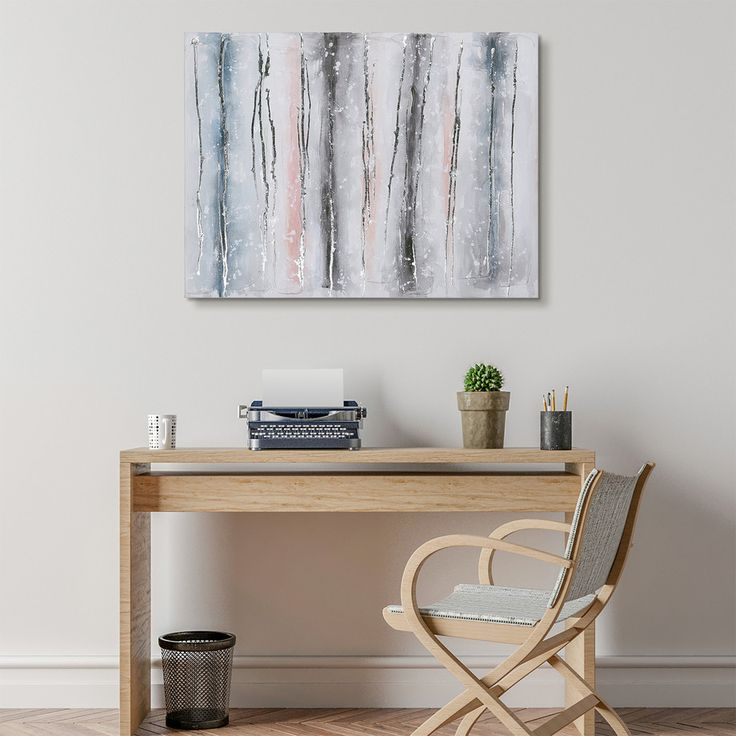
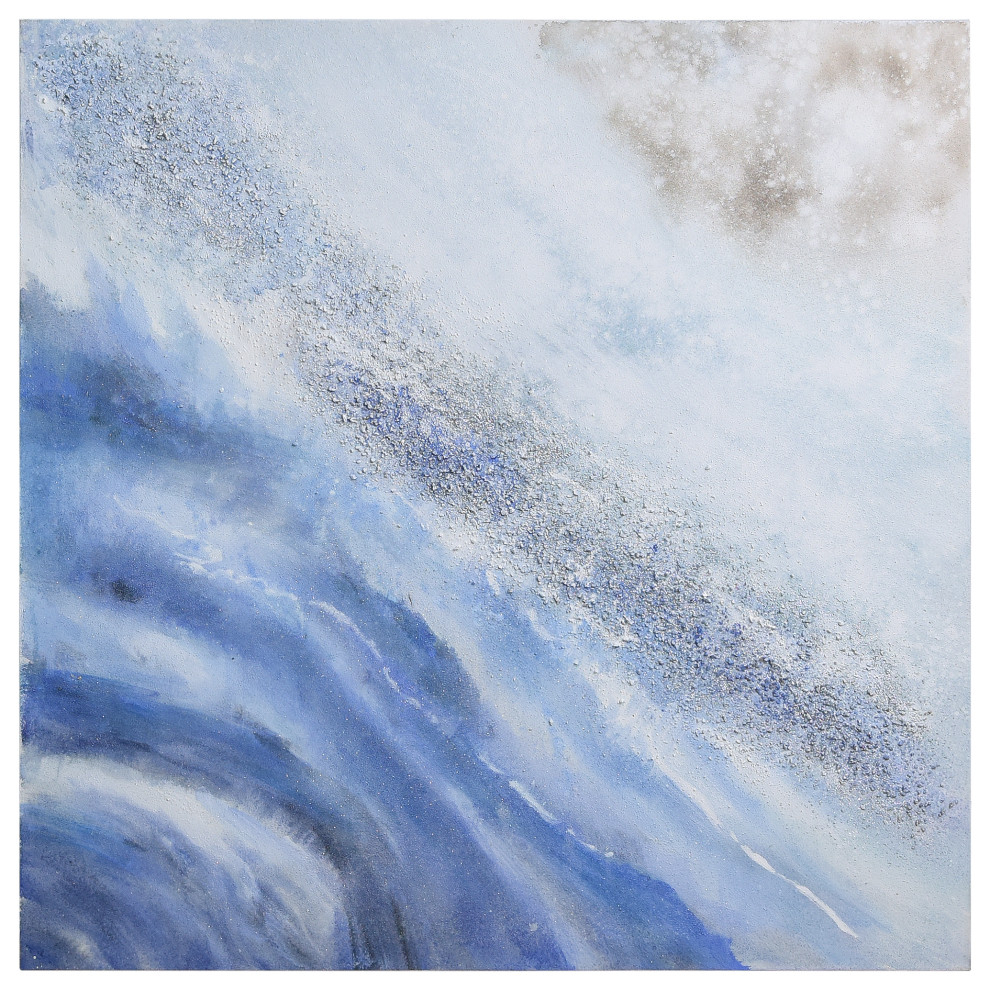
When Martin Edwards set out to compose Sky Elixer, the vision was not merely to splash cerulean and titanium onto a flat surface. It was to capture atmospheric pressure, fluid motion, and the sudden glint of light breaking through an obscured horizon.
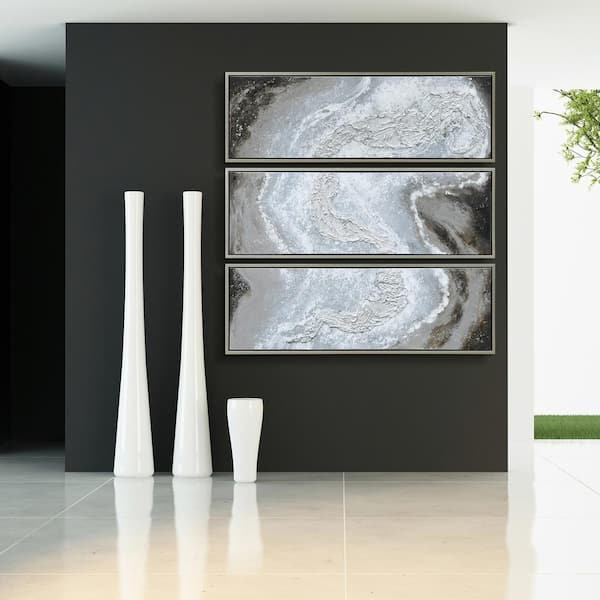
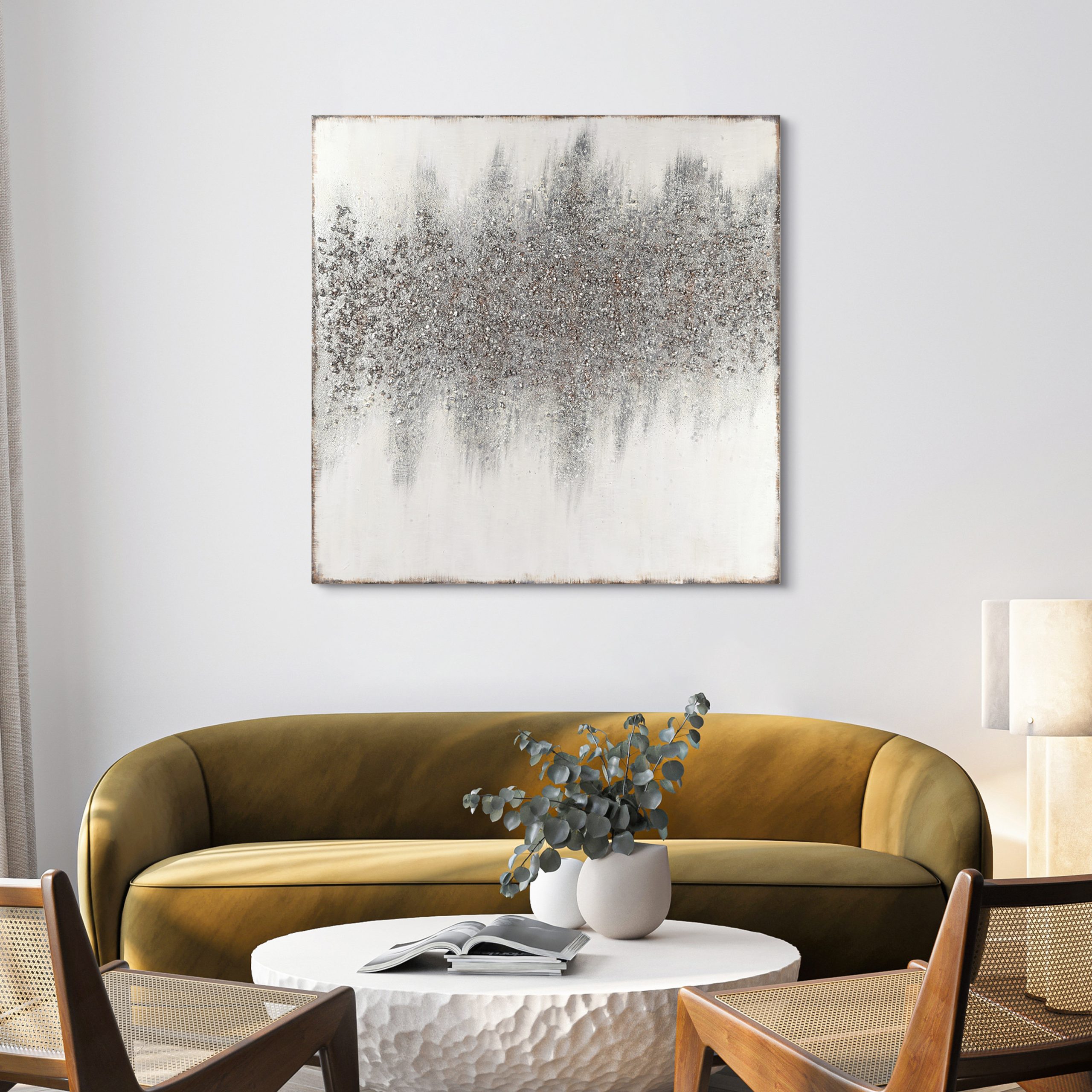
This piece—famously distributed by Empire Art Direct as a 40" x 30" hand-painted textured canvas encased in a stark matte black frame—serves as a masterclass in modern tactile painting. It bridges the gap between minimalist interior design and visceral emotional expression. To understand how a blank rectangle transforms into a luminous, three-dimensional window of azure and silver, we have to pull back the curtain on the studio practices, material science, and compositional discipline that birth works of this caliber.
The evolution of abstract art has long traded in the currency of raw material honesty. Viewers no longer want a polite, flat window into a simulated reality. They want to see the knife marks, the pooling of heavy-bodied acrylics, the physical resistance of the medium, and the deliberate interplay of light across raised surfaces.
Sky Elixer exists at this exact intersection of craftsmanship and visual poetry. In an era dominated by mass-produced digital prints and sterile home decor factories, hand-painted original works command attention precisely because they bear the physical imprint of human labor.
Every wave of deep cobalt, every soft wash of sky-blue, and every flash of reflective silver leaf tells a story of trial, error, and precise execution. Examining this piece offers a rare glimpse into the mechanics of contemporary texture-driven abstraction. It forces us to ask: How do pigment density, spatial balance, and metallic embellishments combine to trick the eye into seeing an endless, breathing atmosphere?
Anatomy of an Atmospheric Abstraction: Decoding the Visual Language of Sky Elixer
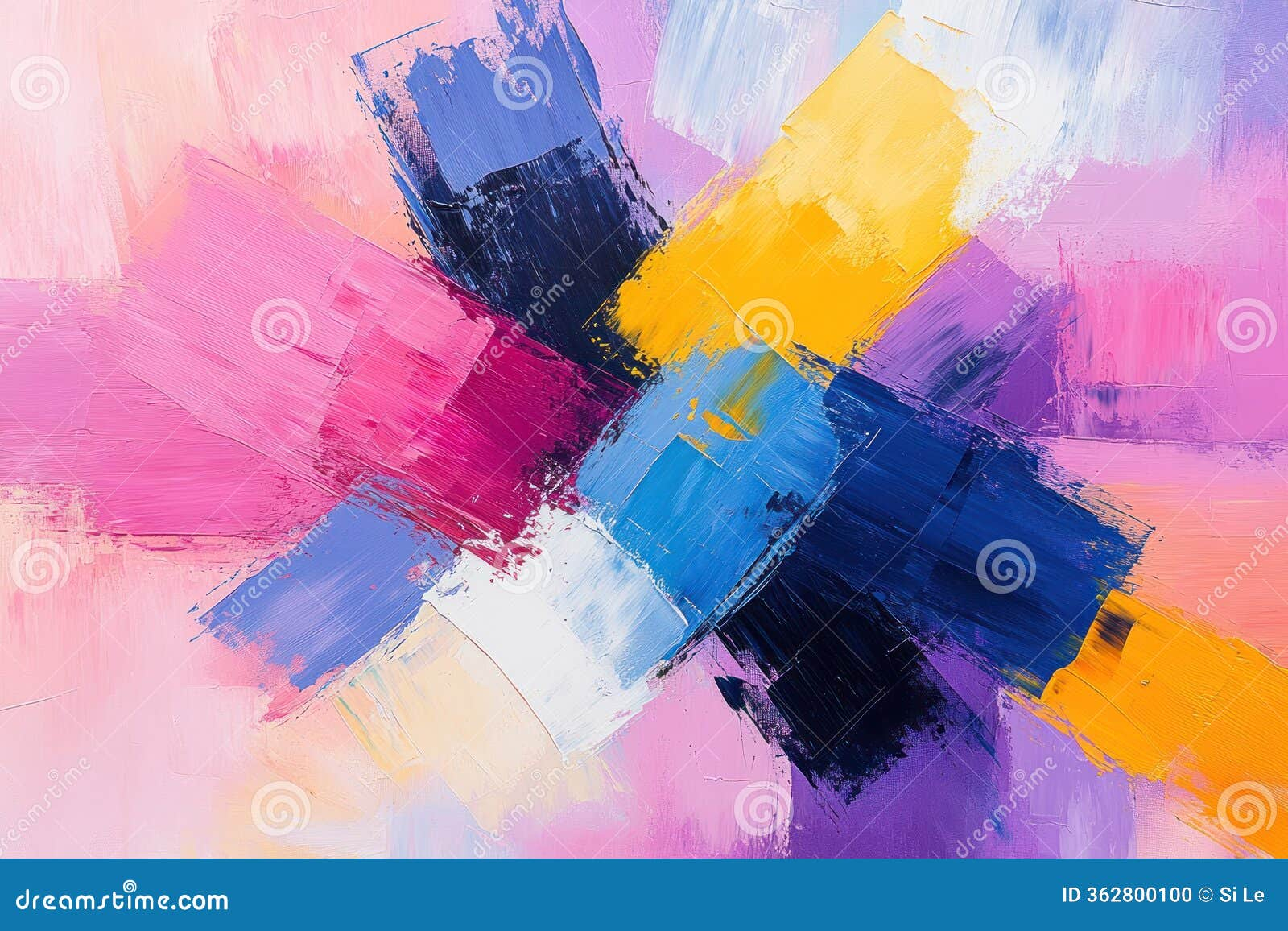
Abstract art often alienates casual observers because it lacks a clear subject, but works like Sky Elixer operate on an entirely different sensory frequency. The composition relies heavily on the push-and-pull between heavy, structural texture and fluid, atmospheric color fields. At first glance, the eye is drawn to the stark contrast between deep oceanic blues and pristine, cloud-like whites. Yet, the true magic of the piece unfolds in the micro-details—the subtle ridges, the feathered edges where wet paint meets dry paste, and the calculated placement of metallic leafing that catches ambient room light from across a gallery space.
Achieving this level of visual depth requires an intimate understanding of the elements and principles of design. Color temperature plays a massive role in how the painting breathes. Cool ultramarine and prussian blues recede into the visual background, creating an illusion of infinite depth, while crisp titanium whites and glittering silver accents push forward toward the viewer. This dynamic tricks the brain into perceiving a three-dimensional space on a two-dimensional plane. The heavy black frame acts as a hard physical boundary, locking the volatile, swirling interior elements into a neat architectural cage. Without that framing, the atmospheric energy might bleed out into the room; with it, the chaos is contained, focused, and elevated.
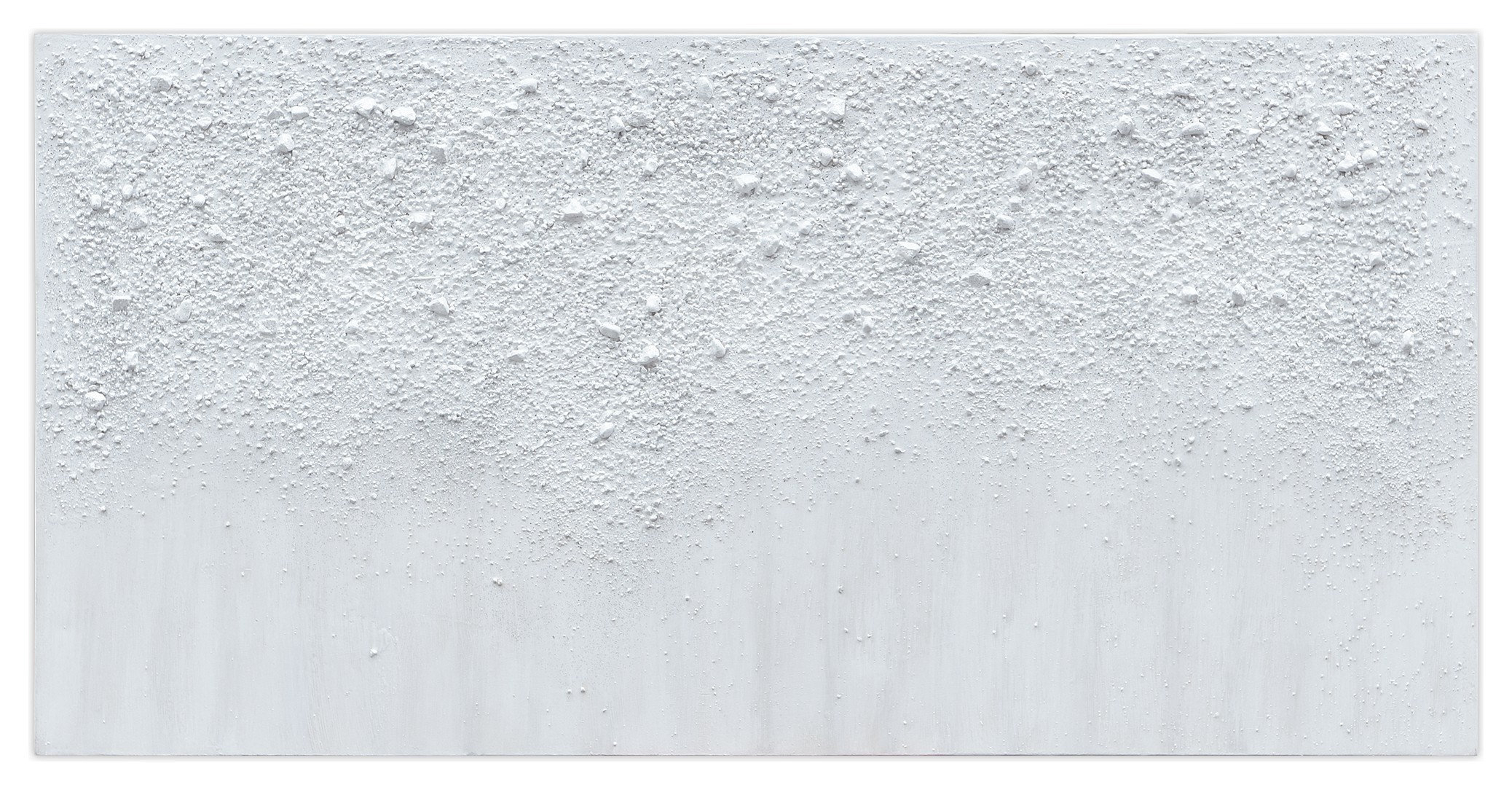
Material experimentation dictates the success of any textured abstract work. Artists working in this realm do not rely on standard student-grade acrylics squeezed straight from a tube. They build their own viscosity. Heavy-bodied mediums, modeling pastes, and coarse pumice gels are often troweled directly onto the canvas before a single brush touch is made. This creates physical topography beneath the paint layer. When washes of translucent blue glaze are later brushed across the cured paste, the liquid pools in the valleys while skimming across the peaks. This simple mechanical action generates natural highlights and shadows that no amount of traditional shading could replicate.
The inclusion of silver leaf introduces a reflective, almost metaphysical element to the composition. Silver does not just sit on the canvas; it interacts with it. Depending on the time of day and the angle of the sun hitting the wall, the silver passages shift from a dull, contemplative gray to a blinding, celestial flash. This makes the artwork inherently reactive to its environment, ensuring that the visual experience is never static.
Material Science and Studio Preparation: Sourcing and Priming for Longevity
Before a single stroke of color touches the surface, the physical foundation of the artwork must be engineered to withstand decades of environmental shifts, humidity changes, and physical stress. Professional abstract painting is as much an exercise in chemistry and carpentry as it is in emotional expression. For a piece designed to feature heavy structural texturing—like the dimensional swells found in Sky Elixer—using standard stretched cotton canvas without proper reinforcement is a recipe for disaster. Heavy modeling paste will crack and shear away from the weave if the substrate sags or lacks proper tension.
Artists begin by selecting heavy-duty, kiln-dried pine stretcher bars to construct a rigid, warp-resistant support frame. Corner bracing is essential to maintain squareness, especially when working on substantial dimensions like 40 by 30 inches. Heavyweight cotton duck or Belgian linen is then stretched across the frame using pneumatic staplers, pulling the textile drum-tight. The sizing phase is next: a coat of acid-free PVA size seals the raw fibers, protecting the organic cotton from rotting when exposed to moisture-heavy acrylic emulsions. Once sealed, multiple layers of gesso are applied and lightly sanded down to achieve the desired tooth—the microscopic roughness that allows subsequent layers of paint to grip the surface securely.
The palette for an atmospheric blue-and-white abstract is deceptively complex. While laypeople might assume the work uses only a couple of standard blue tubes, professional studios maintain a vast library of pigments. Phthalo blue, ultramarine, cobalt, and cerulean are balanced against titanium white, zinc white, and raw umber for lowlights.
Beyond liquid paints, the studio bench is crowded with specialized additives: slow-drying mediums to extend working time, gloss varnishes for vitreous shine, matte gels for chalky opacity, and sheets of genuine or composition silver leaf paired with quick-drying sizing glue. Tools extend far beyond traditional hog-bristle brushes. Flexible silicone palette knives, notched trowels, squeegees, sea sponges, and even household drywall tools are pressed into service to drag, scrape, and carve the wet paste into expressive, wind-swept patterns.
The Step-by-Step Genesis: From Raw Canvas to Finished Masterpiece
Recreating the kinetic energy and emotional resonance of a piece like Sky Elixer requires a disciplined, multi-stage workflow. Abstract expressionism may look spontaneous and reckless to the untrained eye, but true mastery lies in knowing when to intervene, when to let nature take its course, and how to layer elements so they do not turn into a muddy mess.
- Step 1 (Substrate Architecture & Texturing): Build the physical topography of the painting by applying thick layers of modeling paste or acrylic gel using palette knives and trowels, carving sweeping, wind-like ridges into the surface while it is still pliable, and allowing 24 to 48 hours for complete curing.
- Step 2 (The Underlying Wash and Grounding): Apply a loose, fluid wash of thinned Prussian and ultramarine blues across the dry textured surface, allowing gravity and large soft-bristle mops to pull the pigment deep into the valleys while wiping the high points to retain contrast.
- Step 3 (Building Atmospheric Layers): Introduce variations in color temperature by sponging and feathering lighter titanium whites and cerulean hues over the dark background, building up a sense of hazy, cloud-like movement and spatial depth across the composition.
- Step 4 (Applying Metallic Embellishments): Carefully brush quick-drying metal size adhesive onto select raised ridges and focal points, lay down sheets of silver leaf, burnish them firmly with a soft cloth or brush, and gently flake away the excess to reveal pools of brilliant metallic light.
- Step 5 (Final Glazing, Protection, and Framing): Seal the entire cured painting with a UV-resistant clear varnish to protect the pigments and silver leaf from oxidation and yellowing, then drop the completed canvas securely into a heavy matte black floater or box frame to anchor the design.
Navigating the Traps: Common Pitfalls and Practitioner Workarounds
Even experienced painters stumble when tackling large-scale textured abstracts. The most frequent trap is falling in love with a single heavy texture pass and refusing to alter it. When a canvas is loaded down with thick modeling paste, it becomes a tyrant. If the underlying structure is weak, muddy, or compositionally unbalanced, trying to paint over it often results in visual clutter.
Another major hazard is color contamination. Blue and white are notoriously unforgiving when mixed carelessly. A heavy hand with ultramarine can easily overpower titanium white, turning crisp, luminous cloud formations into a dirty, slate-gray smudge.
- Pitfall 1 (Muddy Color Mixing): Overworking wet paint directly on the canvas causes distinct blue and white pigments to blend into a flat, lifeless gray; Workaround: Allow underlayers to dry completely before applying thin, translucent glazes over them using a dry-brush technique.
- Pitfall 2 (Cracking Modeling Paste): Applying structural paste in layers thicker than one-quarter inch leads to severe surface cracking and delamination as the inner core retains moisture while the surface shrinks; Workaround: Build up high-relief areas across multiple thin applications, allowing proper drying intervals between each pass.
- Pitfall 3 (Silver Leaf Oxidation): Using cheap composition leaf without a protective sealer causes the silver finish to tarnish, yellow, or turn completely black over time due to atmospheric sulfur exposure; Workaround: Always apply a specialized non-yellowing acrylic topcoat or leaf sealer immediately after burnishing.
- Pitfall 4 (Unbalanced Visual Weight): Pushing all heavy textures and bright silver accents into one corner creates a lopsided composition that makes the viewer’s eye trap itself awkwardly; Workaround: Step back ten feet every twenty minutes, view the canvas through a camera viewfinder to check monochrome values, and distribute focal points diagonally across the frame.
- Pitfall 5 (Frame Strain and Warping): Forcing a warped or poorly braced canvas into a rigid box frame creates puckers and tension ripples across the fabric face; Workaround: Check stretcher bar squareness with a framing square and insert corner keys to expand tension evenly before mounting.
The Broader Cultural Impact and Modern Interior Dynamics
Art does not exist in a vacuum; it responds directly to the architectural and psychological needs of the spaces it inhabits. In contemporary interior design, minimalist and industrial aesthetics dominate urban homes and corporate offices. Stark white walls, polished concrete floors, and clean-lined steel furniture can easily feel cold and sterile. This is precisely where textured abstract art steps in as a vital psychological counterweight. A piece like Sky Elixer injects organic movement, emotional warmth, and tactile richness into an otherwise austere environment.
The economic and cultural value of hand-painted textured art has surged over the past decade. Discerning buyers increasingly reject flat digital canvas reproductions printed in overseas factories, seeking instead the undeniable authenticity of an original hand-painted brushstroke. The market recognizes the immense labor involved in building three-dimensional textures, applying genuine metallic leaf, and ensuring archival longevity.
Furthermore, abstract art offers a unique psychological benefit to inhabitants: it refuses to dictate a narrative. While a figurative painting tells a specific story about a specific subject, an abstract skyscape allows the viewer to project their own emotional state onto the canvas. On a stressful day, the cool blues and silver highlights might read as a tranquil, fog-shrouded ocean; on another, they evoke a roaring, wind-swept stratosphere. This chameleon-like ability to shift mood makes large abstract statements enduring centerpieces of modern living.
Strategic Frameworks for Appreciating and Displaying Abstract Masterpieces
Owning or creating a dynamic abstract work is only half the battle; how the piece is presented and lit dictates its entire impact within a room. Poor lighting can completely flatten a textured metallic painting, turning a shimmering masterpiece into a dull gray smudge. Professional galleries use precise track lighting equipped with high-CRI (Color Rendering Index) LED bulbs angled at roughly 30 degrees to graze across the canvas surface. This raking light catches every microscopic ridge of modeling paste and every glint of silver leaf, making the painting literally pop off the wall.
For collectors and enthusiasts looking to integrate pieces like Sky Elixer into their homes, establishing a deliberate display framework ensures the art commands the space it deserves.
- Scale and Wall Proportions: Match the canvas dimensions to the surrounding furniture; a 40" x 30" vertical or horizontal piece requires at least six to eight inches of breathing room on all sides from neighboring architectural features or sofas to avoid looking cramped.
- Color Echoing: Pull secondary accent colors from the painting—such as a deep navy or a soft metallic charcoal—and repeat them subtly in throw pillows, rugs, or decorative ceramics to tie the room’s palette together cohesively.
- Avoid Direct Harsh Sunlight: Hang textured metallic works on walls that receive indirect or controllable ambient light rather than blistering direct southern exposure, which can degrade canvas fibers and cause uneven fading over decades.
- Maintenance and Dust Control: Gently dust raised textured surfaces and framed edges every few months using a clean, dry microfiber feather duster or compressed air canister held at a safe distance to prevent particulate buildup in deep crevices.
The journey from a blank, intimidating bolt of cotton duck to a finished, framed masterpiece like Sky Elixer is a testament to the power of human patience, material mastery, and creative intuition. We live in a culture obsessed with instant digital gratification, where images can be generated in fractions of a second with the tap of a screen. Yet, the deep visceral hunger for physical craftsmanship remains entirely unfulfilled by screens. We want to see the knife mark. We want to feel the weight of the paint. We want to catch the accidental glint of silver leaf catching the evening light.
As artists continue to push the boundaries of texture, mixed media, and spatial abstraction, works that marry classical technique with contemporary interior sensibilities will continue to anchor our living spaces. Understanding the intricate process behind these creations deepens our appreciation not just for the object hanging on the wall, but for the rigorous, hands-on discipline required to drag beauty out of chaos. Whether you are an aspiring painter picking up a palette knife for the very first time or a collector curating your home sanctuary, remember that every great masterpiece starts with a willingness to face the blank void and make your mark.