Ever looked at a stunning landscape painting and felt like you could walk right into it? That sense of space and depth isn’t just magic; it’s often the clever use of atmospheric perspective at work. This aricle is your guide to understanding and masterig this powerful technique that artists have used for centuries. Get ready to transform your two-dimensional art into worlds that feel three-dimensional and incredibly real. Let’s begin, shall we?
Art isn’t just about what you paint; it’s about how you make your audience feel. One of the most effective ways to draw viewers into your artwork – to give it that sense of vastness and believability – is through atmospheric perspective. Simply put, it’s the art of representing the effect of the atmosphere on the appearance of objects as they recede into the distance. Forget flat, two-dimensional images; we’re aiming for breathtaking realism and depth. And it’s easier than you might think. This article will break down the core concepts, provide practical tips, and get you creating art that truly breathes.
Understanding the Basics: What is Atmospheric Perspective?
Think about a clear, sunny day. The mountains in the distance appear hazy, lighter in color, and less detailed than the trees in front of you. That’s atmospheric perspective in action. It’s a collection of visual clues that our brains use to perceive distance. Here’s a breakdown of the key principles:
- Color and Value: Objects further away become lighter in value (closer to white) and less saturated (duller in color). The air acts like a filter, scattering the light and reducing the intensity of colors.
- Detail and Clarity: As things move farther away, their details become less distinct. Think about how a mountain range looks up close versus far away – all those individual rocks and trees blur together.
- Contrast: The contrast between light and shadow decreases with distance. This is because the atmosphere diffuses the light, making the shadows less intense.
Mastering these elements is the foundation of creating a convincing sense of depth.
Color and Value: The Palette of Distance
Color and value are the real workhorses of atmospheric perspective. Let’s explore how you can use them effectively:
- Value Shifts: Start with the value (lightness or darkness) of your foreground objects. As they recede, gradually lighten the values. For instance, if your foreground trees are a mid-tone green, the trees in the mid-ground will be a lighter green, and the distant trees will be a very pale, almost bluish-green.
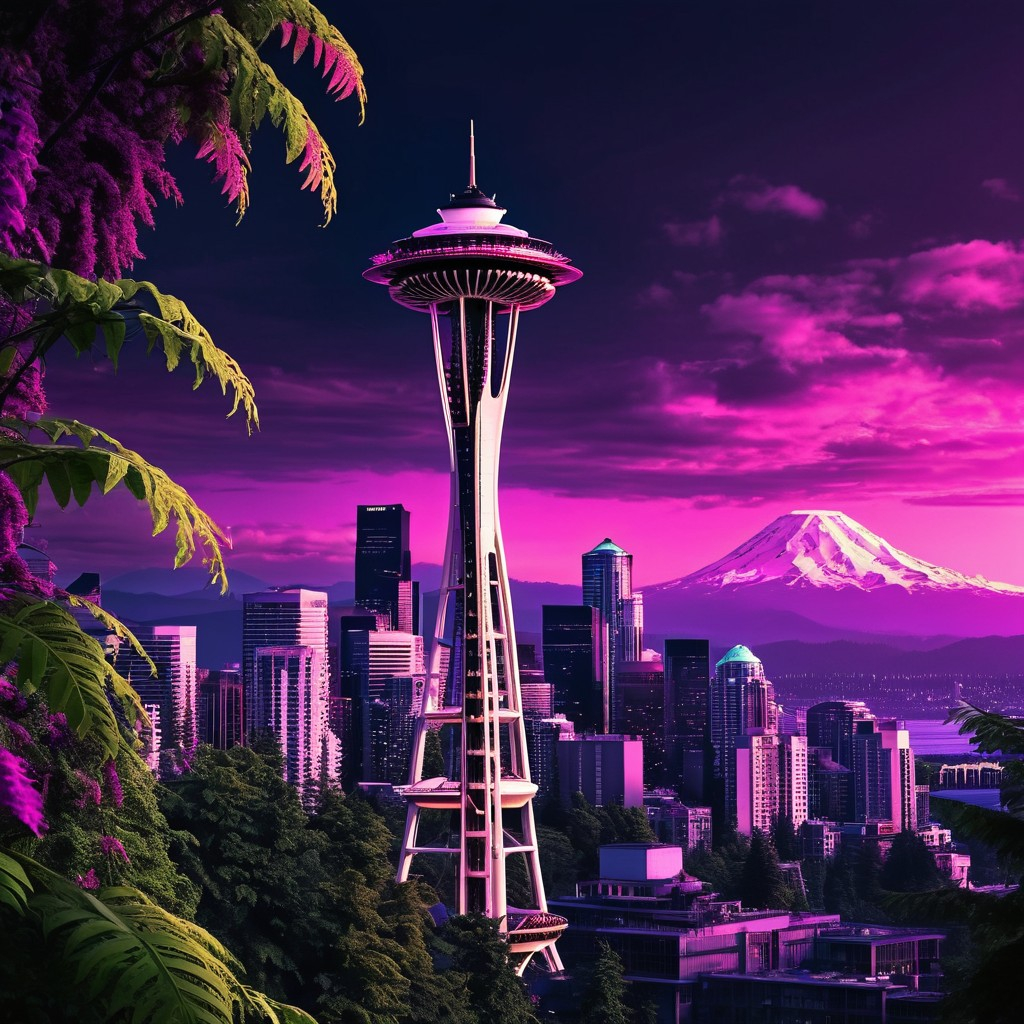
- Color Shifts: Colors also undergo changes. Warm colors (reds, oranges, yellows) tend to recede, while cool colors (blues, greens, violets) advance. Use this to your advantage. Think about a sunset scene. The closer objects might be vibrant reds and oranges, while the distant mountains fade into purples and blues.
- Experiment and Observe: The best way to learn is by observing. Take photos of landscapes and pay attention to how the colors and values change with distance. Practice mixing colors and values on your palette to replicate these effects. Try painting a simple sphere and, using only color and value, make it appear to recede. It’s a fun exercise and really drives the concepts home.
Detail and Texture: Letting Go of Precision
One of the biggest mistakes beginners make is trying to maintain the same level of detail throughout their artwork. Remember, the further away an object is, the less detail we perceive. Here’s how to use detail and texture to your benefit:
- Foreground: Focus on meticulous detail in your foreground elements. This will draw the viewer’s eye in and establish a sense of realism.
- Mid-ground: Simplify the details in the mid-ground. Use broader brushstrokes, softer edges, and less specific forms.
- Background: In the background, reduce detail even further. Suggest shapes and forms rather than defining them precisely. Use soft edges and a more blurred appearance.
Think of it like this: your eyes can’t focus on everything at once. By varying the level of detail, you’re mimicking how our eyes naturally perceive the world. This will make your art feel much more convincing.
Soft Edges vs. Hard Edges: The Atmosphere’s Embrace
Edges play a crucial role in creating the illusion of depth. The atmosphere softens the edges of objects in the distance, creating a sense of haziness. Here’s how to apply this:
- Foreground: Use sharp, well-defined edges for objects in the foreground. This will make them appear closer and more solid.
- Mid-ground: Soften the edges slightly in the mid-ground. Use a lighter touch with your brush and consider blurring the edges with a blending brush or your fingers (if you’re working digitally or with wet mediums).
- Background: In the background, use very soft, blurred edges. This creates the illusion of distance and atmospheric haze.
Experiment with blending techniques and varying your brushstrokes to achieve the desired effect. This will help give your art a more realistic quality.
Putting it All Together: A Step-by-Step Example
Let’s imagine you’re painting a landscape with a mountain range in the distance.
- Foreground: Paint the foreground with detailed trees, grass, and perhaps a stream. Use rich, saturated colors and sharp edges.
- Mid-ground: Paint the mid-ground with a field or a few more trees. Use slightly lighter colors, softer edges, and less detail than in the foreground.
- Background: Paint the mountain range. Use very light values, desaturated colors (perhaps a hint of blue or purple), and soft, blurred edges. The mountains should appear hazy and indistinct.
- Sky: The sky can also contribute to atmospheric perspective. A clear sky will appear lighter and less vibrant towards the horizon. Consider adding some atmospheric perspective to the sky by lightening the value and reducing the saturation as it approaches the horizon.
Remember to constantly compare your values and colors to ensure they work together to create a convincing sense of depth. Practice makes perfect, so don’t be afraid to experiment and try different approaches.
Beyond the Basics: Advanced Techniques
Once you’ve grasped the fundamentals, you can explore some advanced techniques to further enhance your atmospheric perspective:
- Aerial Perspective in Digital Painting: In digital art, you can use layers and blending modes (like ‘Multiply’ or ‘Overlay’) to easily create atmospheric effects. Experiment with adding a layer of blue or purple over your background elements to simulate the atmospheric haze.
- The Use of Light and Shadow: Consider how light interacts with the atmosphere. Light sources will be diffused, and shadows will become softer and less defined with distance.
- Studying Master Artists: Look at the works of artists who excelled at atmospheric perspective, like Leonardo da Vinci, J.M.W. Turner, and Claude Monet. Analyze their techniques and try to understand how they achieved their effects.
- Practice Value Studies: Before starting a complex painting, create a value study (a grayscale version) to plan your values. This will help you visualize your atmospheric perspective and ensure your painting has the desired depth.
By constantly learning and experimenting, you can continuously refine your skills and create even more impressive artwork.
Atmospheric perspective is a powerful tool that can significantly elevate your artwork. By understanding and applying the principles of color, value, detail, and edge control, you can create paintings that draw viewers in and transport them to another world. Don’t be intimidated by the complexity; start with the basics, experiment, and practice. With time and effort, you’ll be able to master this technique and breathe life and depth into your art. So, grab your brushes, your pencils, or your digital tools, and start creating art that truly captivates. Happy painting, and happy creating.
[sps_html tag=”img” src=”https://cdn.theartssection.com/wp-content/uploads/2025/06/abstract-oil-painting-background-color-texture-fragment-of-artwork-regarding-scaled.jpg” alt=”Abstract Oil Painting Background. Color Texture. Fragment Of Artwork … regarding” style=”width: 100%; height: auto;”]
[sps_html tag=”img” src=”https://cdn.theartssection.com/wp-content/uploads/2025/06/premium-photo-artistic-brushstroke-texture-in-bold-and-vivid-colors-throughout-beyond-the-brushstroke-exploring-texture-and-dimension-in-your-artwork.jpg” alt=”Premium Photo | Artistic Brushstroke Texture In Bold And Vivid Colors … throughout Beyond the Brushstroke: Exploring Texture and Dimension in Your Artwork” style=”width: 100%; height: auto;”]
[sps_html tag=”img” src=”https://cdn.theartssection.com/wp-content/uploads/2025/06/colorful-brushstrokes-abstract-oil-painting-background-ai-generated-regarding-beyond-the-brushstroke-exploring-texture-and-dimension-in-your-artwork.jpg” alt=”Colorful Brushstrokes: Abstract Oil Painting Background, Ai Generated … regarding Beyond the Brushstroke: Exploring Texture and Dimension in Your Artwork” style=”width: 100%; height: auto;”]
[sps_html tag=”img” src=”https://cdn.theartssection.com/wp-content/uploads/2025/06/colorful-brushstrokes-abstract-oil-painting-background-ai-generated-pertaining-to.jpg” alt=”Colorful Brushstrokes: Abstract Oil Painting Background, Ai Generated … pertaining to” style=”width: 100%; height: auto;”]
[sps_html tag=”img” src=”https://cdn.theartssection.com/wp-content/uploads/2025/06/texture-art-painting-at-paintingvalley-com-explore-collection-of-pertaining-to.jpg” alt=”Texture Art Painting At Paintingvalley.com | Explore Collection Of … pertaining to” style=”width: 100%; height: auto;”]