In the world of abstract art, there’s a delicate dance happening between what’s taken away and what’s added. The most captivating pieces often emerge when artists skillfully navigate the tension between minimalism and boldness. It’s not just about having fewer elements, but about making every single one count. Think of it like a chef who knows exactly when to add salt versus when to let ingredients shine on their own.
Abstract art has always been about breaking free from literal representation, but within that freedom lies a profound challenge: how to create impact while maintaining simplicity. The greatest abstract works don’t just avoid complexity for the sake of it – they purposefully choose what to include and what to exclude. This creates a visual conversation that speaks directly to our emotions rather than our intellect. Imagine walking into a gallery and feeling immediately drawn to a piece that seems both empty and full at the same time. That’s the magic of balancing minimalism with boldness in abstract art. It’s not enough to simply have few elements; the few must carry tremendous weight. The question isn’t whether to be simple or complex, but rather how to find that sweet spot where restraint becomes power.
Understanding the Foundation
Before diving into techniques, it’s essential to grasp what makes abstract art work. At its core, abstract art strips away recognizable imagery to focus on pure visual elements like color, form, line, and texture. Minimalism in this context means using fewer elements intentionally, not accidentally. Boldness doesn’t necessarily mean loud colors or large scale – it could be a single brushstroke that commands attention or a strategic void that creates drama. The foundation rests on understanding that each element must serve the whole. Consider how a single red dot on a white canvas can create more tension than an entire field of red. The contrast isn’t just visual; it’s emotional and psychological. Artists like Mark Rothko and Agnes Martin mastered this by creating deeply felt experiences through restrained yet powerful compositions. Their work proves that less can indeed become more when approached with intentionality.
The Power of Strategic Spacing
One of the most misunderstood aspects of minimalist abstract art is the role of space. Many people mistake empty space for emptiness, but in the hands of skilled artists, negative space becomes a character in itself. Strategic spacing can guide the viewer’s eye, create rhythm, and emphasize important elements. When artists leave room between shapes or allow breathing space around focal points, they’re creating opportunities for contemplation. Think of how a painting might seem to float or how a geometric form appears to pulse with energy. These effects come from deliberate placement rather than random arrangement. The rule of thirds applies here too – placing key elements along imaginary grid lines creates more dynamic compositions than centering everything. Space isn’t just background; it’s part of the message. A large empty area next to a small but vibrant shape can make that shape feel monumental. This interplay of presence and absence creates depth that goes beyond mere visual appeal.
Color as a Tool for Bold Statement Making
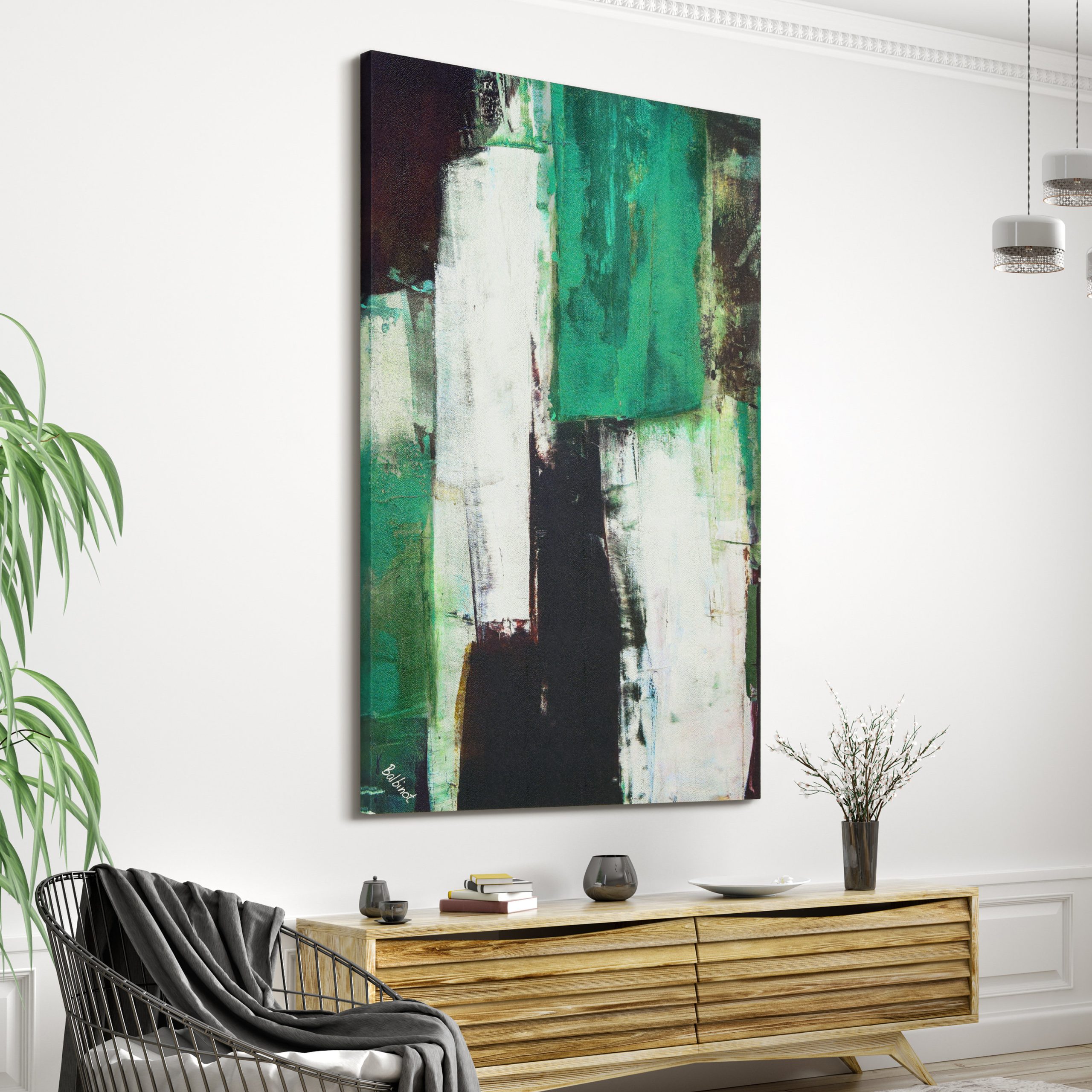
Color choices in abstract art can make or break the balance between minimalism and boldness. A monochromatic palette might seem simple, but even within one hue, artists can create dramatic shifts through temperature, saturation, and value. Bold color decisions often involve choosing unexpected combinations or using extreme contrasts. For example, a deep blue against bright yellow isn’t just about the colors themselves – it’s about the emotional response those combinations trigger. Some artists use color sparingly to maximize impact, while others might employ bold hues across large areas to create immediate visual statements. The key is consistency in approach. When an artist decides to use color as a primary expressive tool, they must commit fully to that decision. A splash of orange in an otherwise neutral composition becomes a powerful focal point because it stands out so dramatically. Color doesn’t need to be flashy to be bold – sometimes subtlety in color choice creates more impact than obvious vibrancy.
Texture and Material Innovation
Abstract artists often discover that texture adds layers of meaning without adding visual clutter. A smooth surface might suggest calm, while rough textures can imply movement or tension. The tactile quality of paint, mixed media, or unconventional materials creates another dimension of expression. Consider how a canvas with thick impasto layers can make a simple line appear monumental, or how sand or fabric can create subtle variations in light reflection. These physical qualities make the artwork more than just a visual experience – they invite touch and deeper engagement. Artists like Jackson Pollock used texture through drip painting to create movement that seemed to pulse across the canvas. His technique wasn’t just about chaos; it was about creating rhythm through the physical act of applying paint. Modern artists continue exploring texture through digital methods, layering, or combining traditional and contemporary approaches. The material itself becomes part of the artistic statement, especially when it challenges expectations.
Line Quality and Movement Patterns
Lines in abstract art aren’t just boundaries or outlines – they’re the invisible threads that connect all visual elements. The quality of a line – whether it’s thick, thin, curved, straight, jagged, or flowing – communicates different emotions and energies. Bold lines can assert dominance, while delicate ones can whisper intimacy. Movement patterns created by lines can guide viewers through the composition in ways that are almost subconscious. An artist might use a series of intersecting lines to create a sense of urgency, or perhaps a single flowing line to suggest peace. The rhythm of line work affects how long someone spends looking at a piece. Consider how a few well-placed strokes can create a sense of motion that lasts long after viewing. Sometimes the most powerful abstract pieces don’t rely on multiple elements but on how one line moves through space, changing direction and intensity. Line work allows artists to create narratives without words, telling stories through the path of their hand.
Scale and Proportion Mastery
Scale and proportion play crucial roles in creating balance between minimalism and boldness. A small painting can feel enormous if the artist uses proportions that surprise the viewer. Conversely, a large canvas might feel insignificant if the elements are too small or scattered. The relationship between different sized elements within a composition creates visual tension and harmony simultaneously. Artists often play with expectations – showing a massive shape that seems to dwarf the canvas, or a tiny element that commands attention despite its size. Consider how some abstract works use oversized brushstrokes to create intimacy, or how a small dot can feel monumental when placed strategically. The key is not just about making things bigger or smaller, but about making them feel right in relation to each other and to the viewer’s perception. Scale becomes a tool for manipulation – artists can make the familiar seem strange or the strange feel familiar through careful proportional relationships.
Mastering the balance between minimalism and boldness in abstract art isn’t about choosing sides – it’s about creating a dialogue between restraint and expression. The most successful abstract pieces understand that every element, from the smallest dot to the largest shape, must contribute to a larger narrative. This balance requires constant experimentation, honest self-critique, and an openness to how the artwork evolves during creation. It’s a process that demands patience and precision, where the artist must learn to see the extraordinary in the ordinary. Whether working with color, line, texture, or space, the ultimate goal remains the same: to create a visual experience that resonates emotionally and intellectually. The journey toward this balance is ongoing, filled with discoveries about what works and what doesn’t. Every piece learned from becomes a foundation for the next exploration. The secret lies not in perfection but in the courage to take risks and the wisdom to know when to pull back. Abstract art’s power comes from its ability to communicate complex feelings through simple visual elements, and finding that perfect equilibrium is what separates good abstract work from great.
[sps_html tag=”img” src=”https://cdn.theartssection.com/wp-content/uploads/2025/12/what-is-balance-in-art-4-types-examples-and-tips-yourartpath-with-oversize-blue-white-gray-silver-abstract-art-painting-74-wall-art-leaner-tall.jpg” alt=”What Is Balance In Art? (4 Types, Examples And Tips) - Yourartpath with Oversize Blue White Gray Silver Abstract Art Painting, 74" Wall Art Leaner Tall” style=”width: 100%; height: auto;”]
[sps_html tag=”img” src=”https://cdn.theartssection.com/wp-content/uploads/2025/12/principles-of-design-balance-examples-intended-for-creating-visual-balance-with-tall-leaner-abstract-art-installations.jpg” alt=”Principles Of Design Balance Examples intended for Creating Visual Balance with Tall Leaner Abstract Art Installations” style=”width: 100%; height: auto;”]
[sps_html tag=”img” src=”https://cdn.theartssection.com/wp-content/uploads/2025/12/premium-ai-image-achieving-balance-abstract-art-with-creating-visual-balance-with-tall-leaner-abstract-art-installations.jpg” alt=”Premium Ai Image | Achieving Balance Abstract Art with Creating Visual Balance with Tall Leaner Abstract Art Installations” style=”width: 100%; height: auto;”]
[sps_html tag=”img” src=”https://cdn.theartssection.com/wp-content/uploads/2025/12/balance-in-art-examples-intended-for-creating-visual-balance-with-tall-leaner-abstract-art-installations.jpg” alt=”Balance In Art Examples intended for Creating Visual Balance with Tall Leaner Abstract Art Installations” style=”width: 100%; height: auto;”]
[sps_html tag=”img” src=”https://cdn.theartssection.com/wp-content/uploads/2025/12/balance-in-art-achieving-harmony-equilibrium-stability-with-regard-to-oversize-blue-white-gray-silver-abstract-art-painting-74-wall-art-leaner-tall.jpg” alt=”Balance In Art: Achieving Harmony, Equilibrium, Stability with regard to Oversize Blue White Gray Silver Abstract Art Painting, 74" Wall Art Leaner Tall” style=”width: 100%; height: auto;”]