When you think of urban art, you probably picture bustling streets, towering buildings, and endless stretches of asphalt. But what happens when artists take these familiar scenes and translate them onto canvas? The result is often breathtaking – a blend of realism and imagination that captures the soul of the city itself. These artists don’t just paint what they see; they paint what they feel, what they remember, and what they imagine.
City and road canvas art is more than just painting buildings and roads. It’s about capturing the essence of urban life – the energy, the movement, the stories that unfold in every corner of our cities. From the quiet residential streets to the busy highway interchanges, artists find inspiration in every line and shadow. What makes these works truly special isn’t just their technical execution, but the way they connect viewers to their own experiences of urban spaces. The techniques used are as diverse as the cities themselves, each artist bringing their unique perspective to transform ordinary scenes into extraordinary visual narratives.
Understanding Urban Perspective and Composition
Getting the right perspective in city art is like finding the perfect angle for a great photograph. Artists must decide whether to show a wide view of a city skyline or focus on a single street corner. They consider how buildings frame the scene, how roads lead the eye through the composition, and how light and shadow create depth. Many painters use the rule of thirds, placing key elements along imaginary grid lines rather than centering them. This creates more dynamic and interesting artwork. Some artists prefer dramatic angles, shooting from low viewpoints to emphasize tall buildings, while others choose bird’s-eye perspectives to showcase the intricate patterns of road networks. The choice of perspective tells the viewer exactly what story to focus on.
Mastering Light and Shadow in Urban Scenes
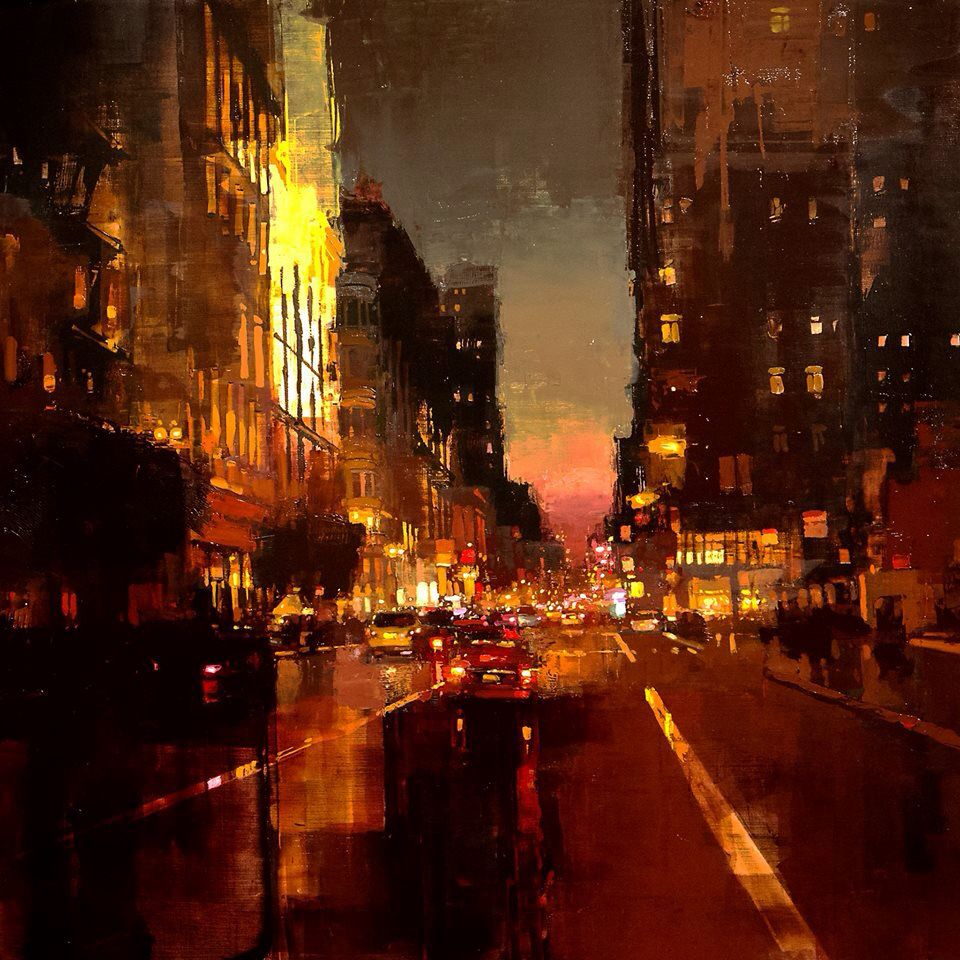
Lighting can make or break a cityscape painting. Artists study how sunlight hits different surfaces throughout the day – the sharp shadows cast by skyscrapers, the warm glow of streetlights at dusk, or the cool blue tones of evening skies. They pay attention to how buildings block and reflect light, creating interesting contrasts between bright and dark areas. Some artists use a technique called chiaroscuro, emphasizing the contrast between light and dark to create drama and dimension. Others might apply multiple layers of paint to build up subtle variations in tone. The key is understanding that urban lighting is rarely uniform. Street lamps create pools of golden light, while windows glow from within, casting their own unique colors onto sidewalks and pavement. These small details make all the difference in bringing a scene to life.
Building Depth Through Layering Techniques
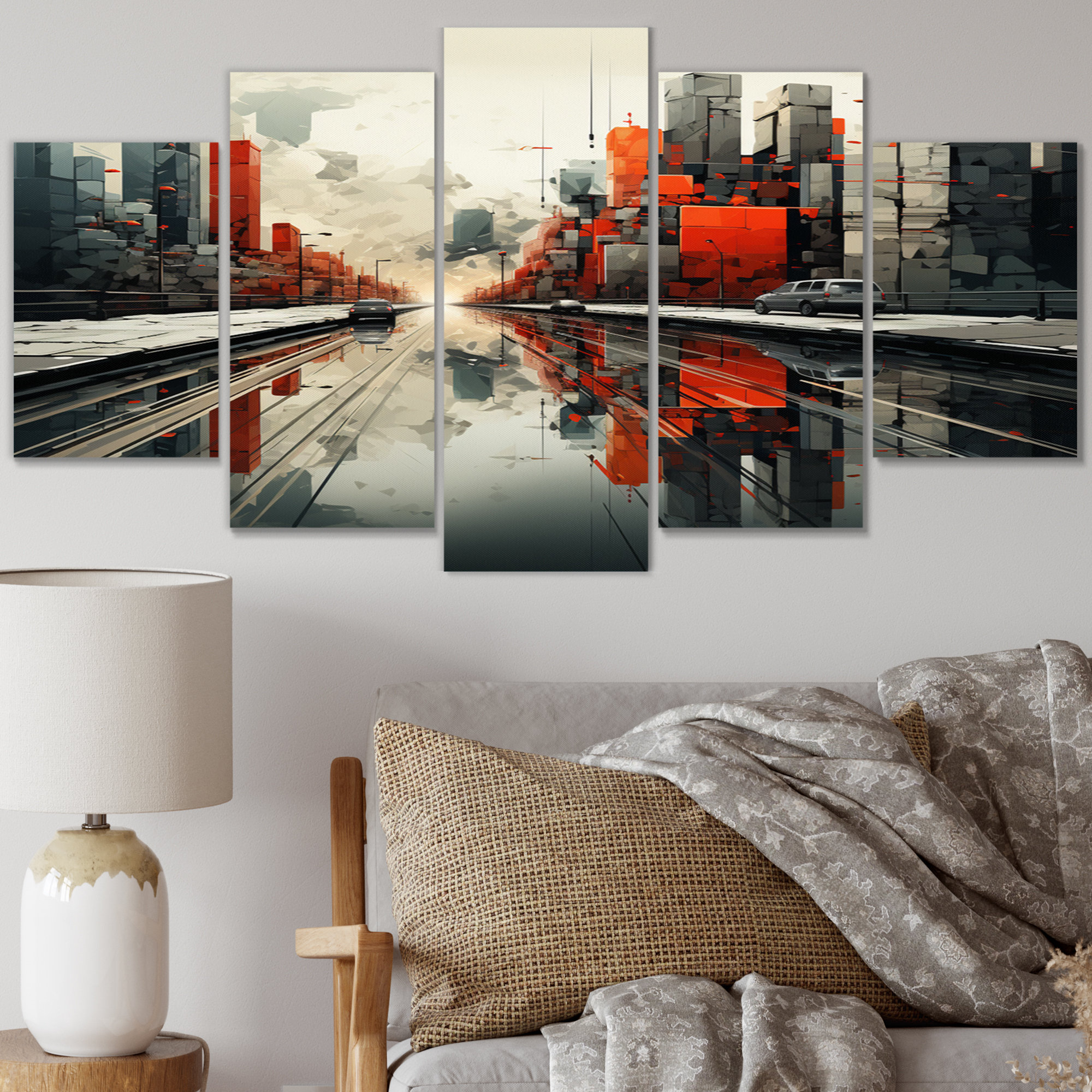
Creating a sense of depth on a flat canvas requires careful planning and skillful application of paint. Artists start with the background elements – distant buildings, sky, and far-off roads – using lighter colors and softer edges. Then they work forward, adding more detailed elements like street signs, cars, and people. This layering approach helps establish a clear sense of space. Many painters use atmospheric perspective, where objects in the distance appear less detailed and slightly bluish due to the atmosphere. They also employ linear perspective, making parallel lines appear to converge toward a vanishing point. Some artists even add texture to ground surfaces, showing how rain has pooled in certain spots or how snow has covered different areas differently. Each layer builds upon the last, creating a rich, multi-dimensional experience.
Capturing Movement and Traffic Flow
The most dynamic city paintings aren’t static images – they’re alive with motion and activity. Artists study how traffic moves through intersections, how pedestrians navigate busy sidewalks, and how vehicles create patterns across the landscape. They often use brushstrokes that suggest motion, creating streaks of color that mimic the blur of passing cars. Some artists paint multiple vehicles at once, using different techniques to show various speeds – fast-moving cars with quick, bold strokes versus slower traffic with more detailed rendering. They might also incorporate elements like dust clouds, reflections, or even ghostly traces of movement to imply action. The goal is to make viewers feel like they’re standing in the middle of the scene, watching it unfold around them. Sometimes, artists even add small details like birds flying overhead or people walking quickly to enhance the sense of life and movement.
Color Theory in Urban Environments
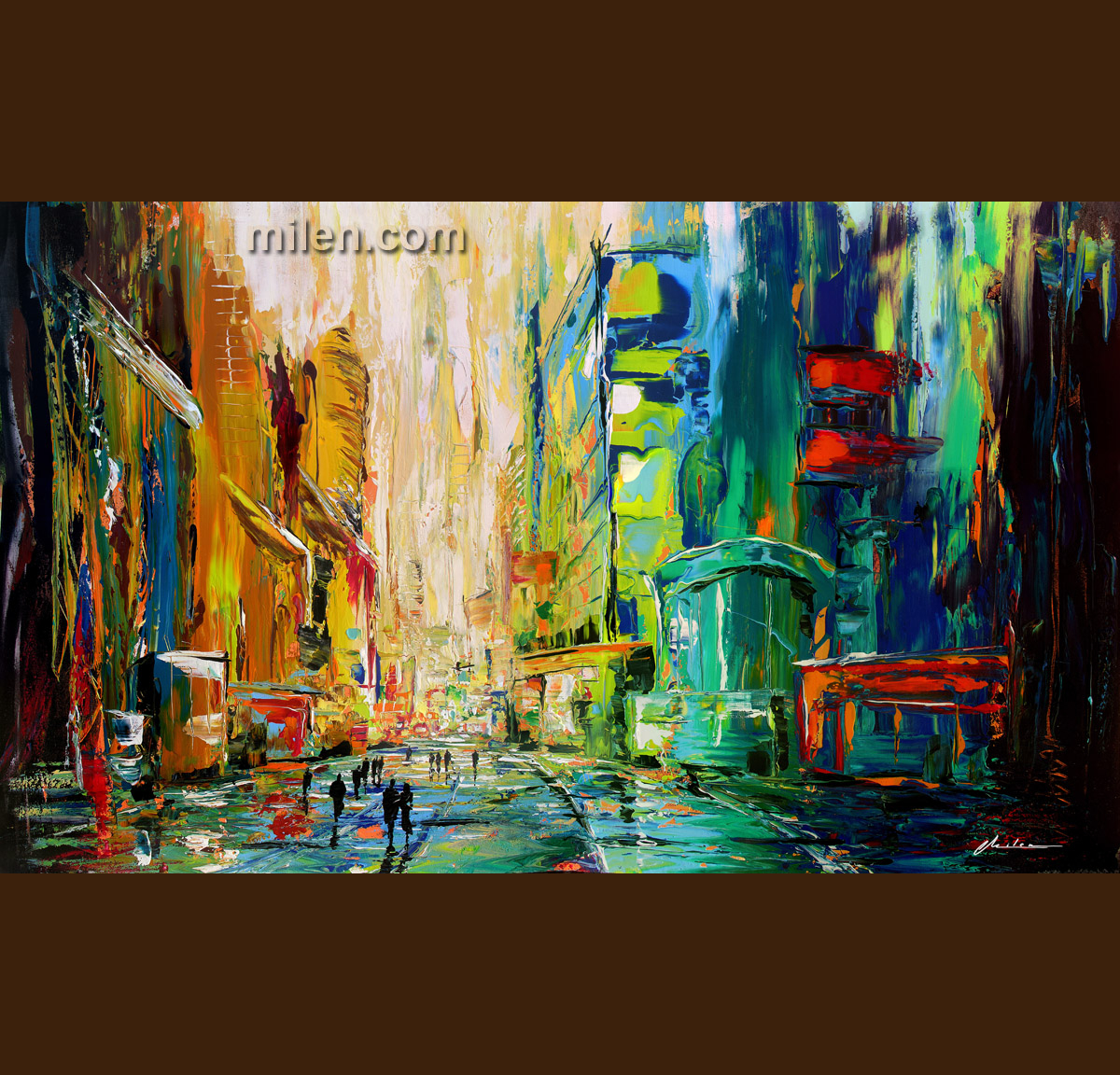
Colors tell stories in city art just as much as shapes and lines do. Urban environments offer a palette that’s both harsh and beautiful – concrete grays, steel blues, brick reds, and glass whites. Artists learn to balance these strong colors with more muted tones to create harmony. They might use complementary colors to make certain elements pop – a bright red fire hydrant against a gray wall, or yellow streetlights against dark buildings. Temperature plays a big role too. Warm oranges and yellows suggest activity and life, while cool blues and grays indicate calm or night-time settings. Some artists even experiment with color temperature shifts across their canvas, making one side feel warmer and another cooler to create a more dynamic composition. The right color choices can transform a simple street scene into something emotionally powerful.
Detail Work and Texture Creation
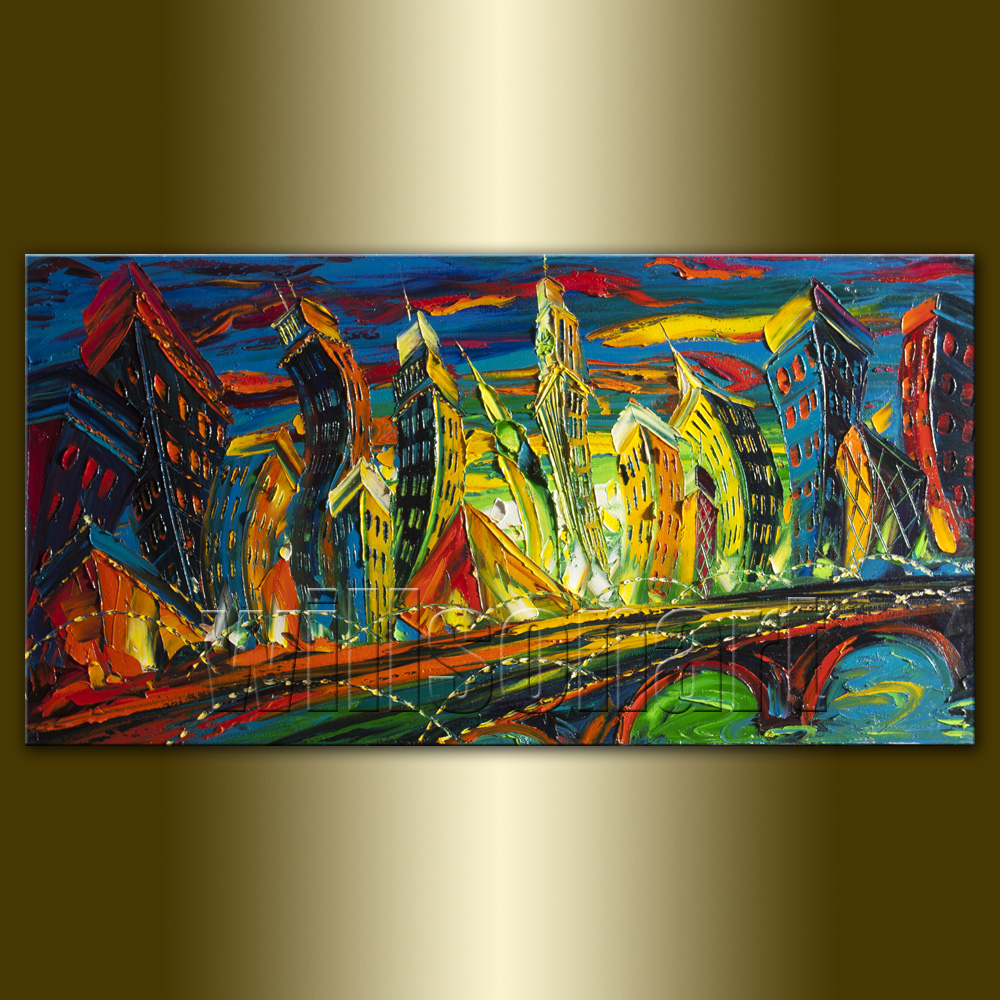
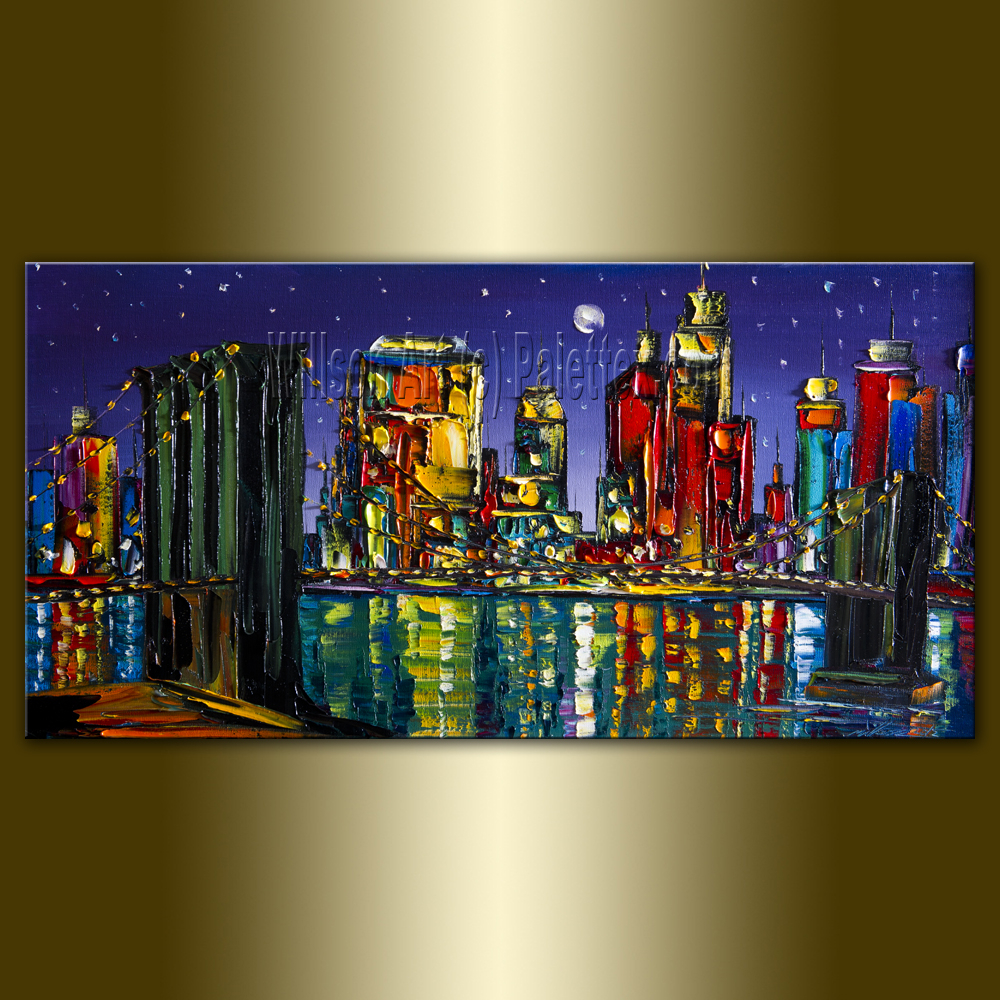
The magic often happens in the details. A well-painted window reflection, a weathered brick surface, or a perfectly rendered traffic sign can elevate a good painting to a great one. Artists develop techniques for creating realistic textures – smooth glass surfaces that catch light, rough concrete that shows wear, or soft grass growing between paving stones. They might use palette knives to create thick impasto textures, or fine brushes to render tiny details like individual fence posts or street lamp fixtures. Some artists even incorporate mixed media elements, adding materials like sand or small stones to create tactile effects. The key is consistency – if a building is made of brick, all the bricks should look similar, and if a street is wet, all the wet surfaces should have the same reflective quality. Attention to these small elements gives the entire piece credibility and realism.
Creating stunning city and road canvas art is both an art and a science. It combines technical skills with emotional intelligence, requiring artists to observe their surroundings closely while also imagining what could be possible. These techniques don’t happen overnight – they’re developed through practice, observation, and a deep appreciation for urban life. Whether you’re looking at a painting of a busy downtown intersection or a quiet suburban street, you’re experiencing the result of countless hours spent studying light, color, perspective, and movement. The beauty of this art form is that it allows us to see familiar places in new ways, reminding us that even the most ordinary streets can hold extraordinary stories waiting to be told. The next time you walk down a busy street, take a moment to appreciate how those same scenes might inspire an artist to create something truly magical on canvas.
[sps_html tag=”img” src=”https://cdn.theartssection.com/wp-content/uploads/2025/11/oil-painting-canvas-cityscape-at-clifford-hochstetler-blog-in-modern-city-and-road-canvas-print.jpg” alt=”Oil Painting Canvas Cityscape At Clifford Hochstetler Blog in "Modern City And Road" Canvas Print” style=”width: 100%; height: auto;”]
[sps_html tag=”img” src=”https://cdn.theartssection.com/wp-content/uploads/2025/11/abstract-cityscape-painting-at-paintingvalley-com-explore-collection-intended-for-modern-city-and-road-canvas-print.jpg” alt=”Abstract Cityscape Painting At Paintingvalley.com | Explore Collection … intended for "Modern City And Road" Canvas Print” style=”width: 100%; height: auto;”]
[sps_html tag=”img” src=”https://cdn.theartssection.com/wp-content/uploads/2025/11/urban-canvas-painting-at-irene-troyer-blog-in-modern-city-and-road-canvas-print.jpg” alt=”Urban Canvas Painting At Irene Troyer Blog in "Modern City And Road" Canvas Print” style=”width: 100%; height: auto;”]
[sps_html tag=”img” src=”https://cdn.theartssection.com/wp-content/uploads/2025/11/ivy-bronx-abstract-future-cityscape-i-cityscapes-canvas-art-print-5-pertaining-to-modern-city-and-road-canvas-print.jpg” alt=”Ivy Bronx Abstract Future Cityscape I - Cityscapes Canvas Art Print - 5 … pertaining to "Modern City And Road" Canvas Print” style=”width: 100%; height: auto;”]
[sps_html tag=”img” src=”https://cdn.theartssection.com/wp-content/uploads/2025/11/cityscape-giclee-canvas-print-modern-art-from-original-oil-painting-by-regarding-modern-city-and-road-canvas-print.jpg” alt=”Cityscape Giclee Canvas Print Modern Art From Original Oil Painting By … regarding "Modern City And Road" Canvas Print” style=”width: 100%; height: auto;”]