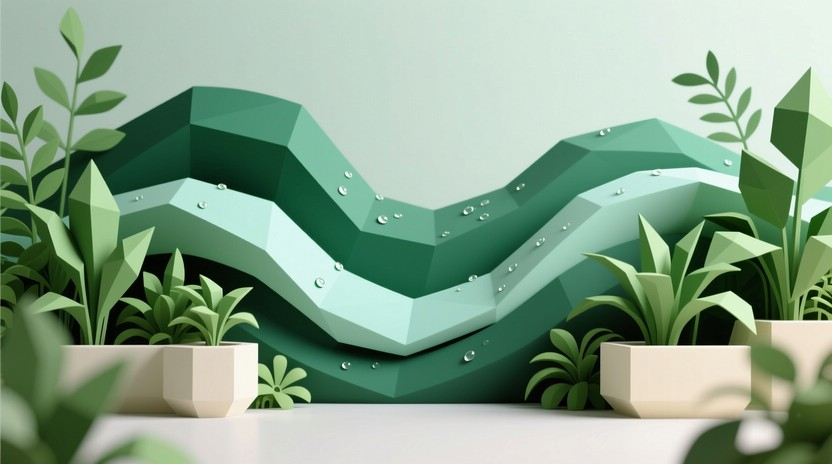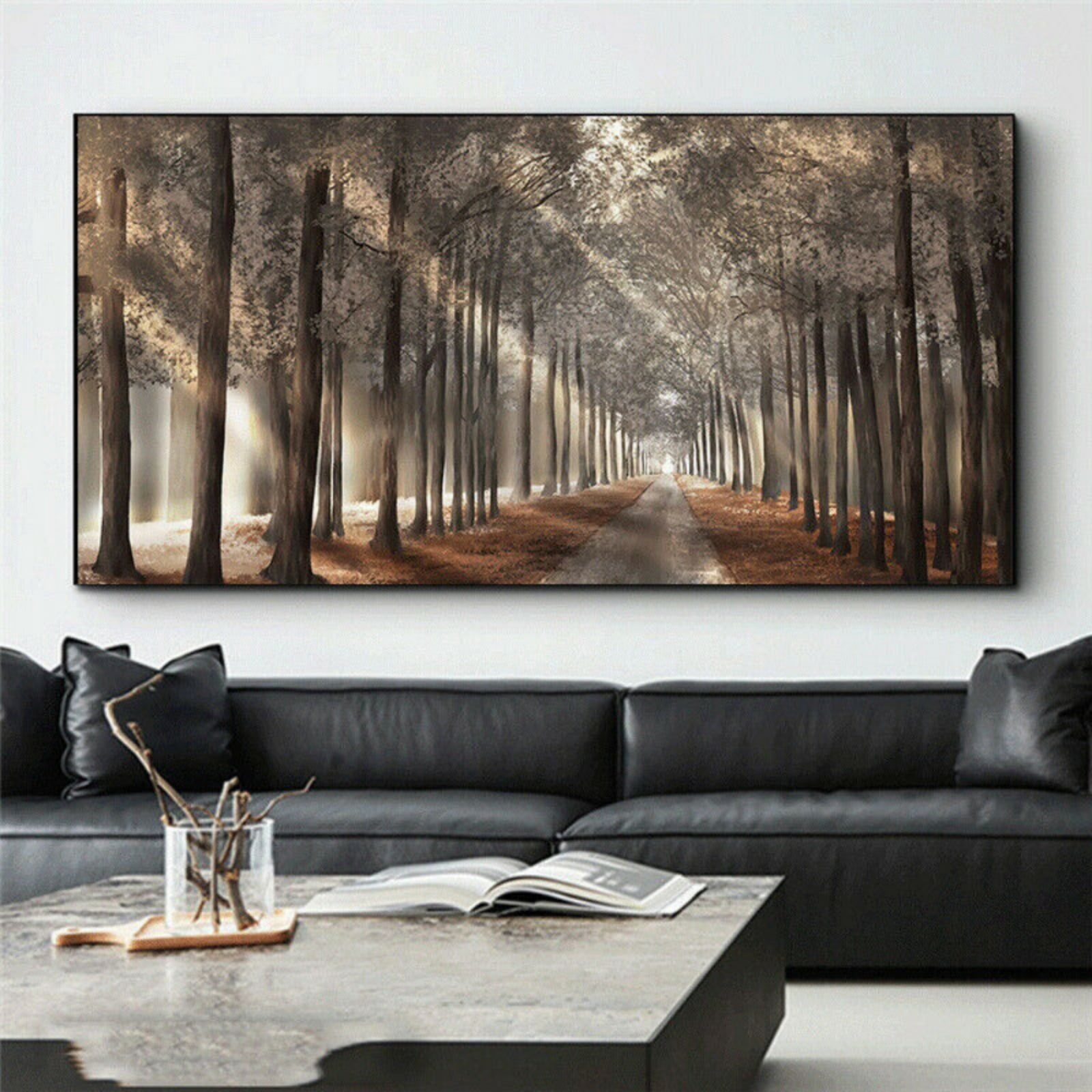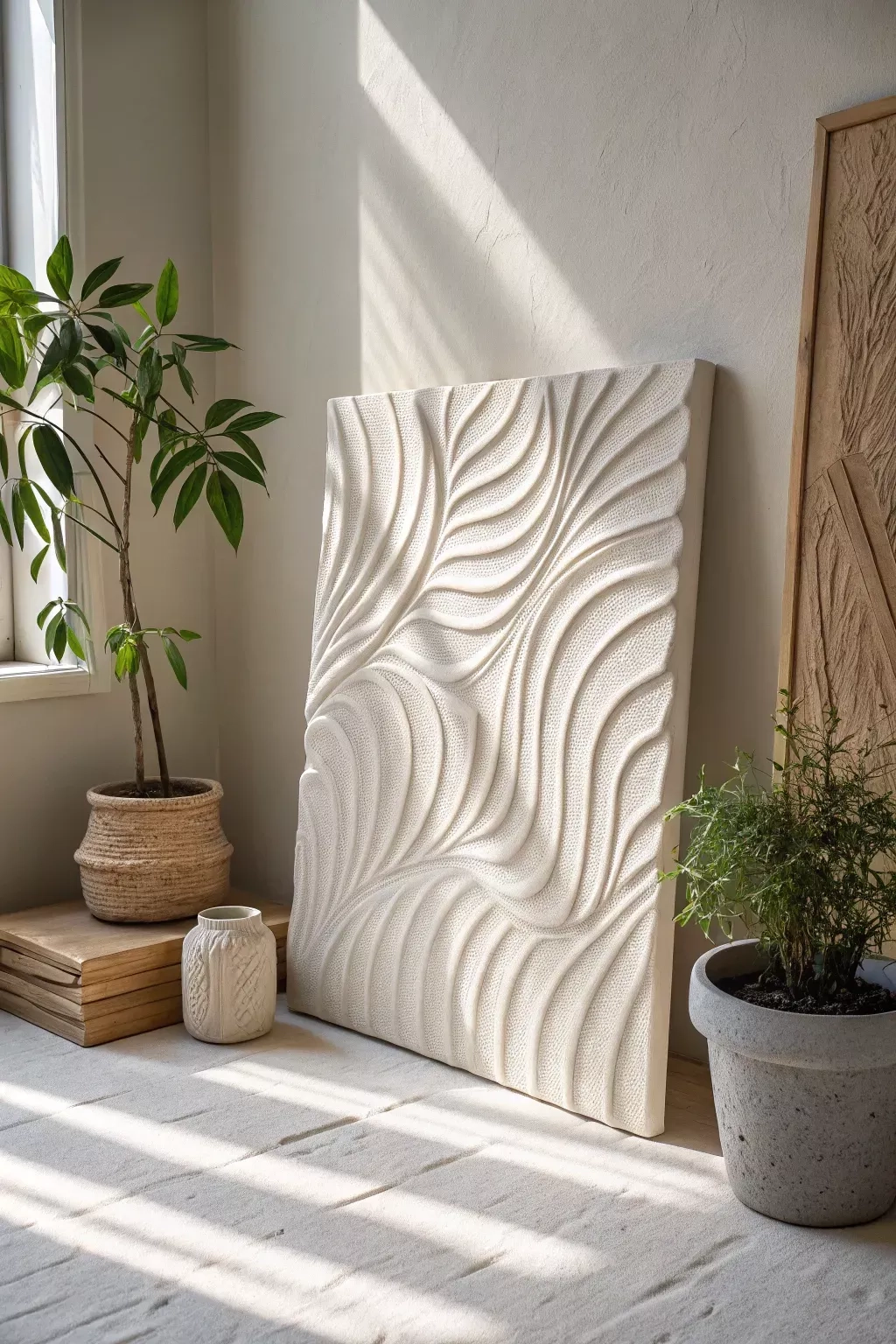
Step into a double-height luxury loft at dusk, and you will notice how an interior can suddenly feel heavy, anxious, or entirely serene. More often than not, that psychological atmospheric shift is not coming from the furniture arrangement or the architectural lighting grid. It is emanating from the walls. When a client commissions or selects a massive piece of wall art—particularly an expansive abstract green composition meant to anchor a twenty-foot expanse—the stakes change entirely. A small canvas on a studio easel behaves entirely differently than an eighty-inch behemoth suspended above a structural concrete hearth.
Scale is not merely a mathematical ratio of wall space to canvas dimensions; it is a visceral experience of visual mass, light absorption, and spatial tension. Green, as a chromatic spectrum, carries unique biological baggage. Human eyes can distinguish more shades of green than any other color, an evolutionary trait hardwired from our days scanning dense canopies for forage and threat. When that color is abstracted—stripped of literal leaf or stem and reduced to raw gesture, impasto texture, tonal saturation, and sweeping gesture—it interacts with architectural scale in ways that novice decorators rarely anticipate.
Understanding what happens when you blow up a gestural green canvas to monumental proportions requires looking past standard decorating rules of thumb. Practitioners who spend their careers outfitting grand residential and commercial spaces know that green art at scale does not just sit quietly in the background. It breathes, it shrinks rooms or expands them, and it wages a constant, silent war against natural and artificial light.
The Chromatic Physics of Expanding Botanical and Mineral Hues
When a green abstract composition moves from a modest 24-by-36-inch format to a sprawling 72-by-96-inch gallery scale, the physics of color perception undergo a radical transformation. Small swatches of sage or olive green can feel tranquil, grounding, and unobtrusive on a mood board. However, when those exact same pigments are multiplied across thirty square feet of canvas, their visual weight multiplies exponentially. A deep forest green that reads as sophisticated charcoal-adjacent shadow in a small frame can suddenly transform into a visual black hole, swallowing the ambient light of an entire room if the underlying compositional architecture lacks structural contrast.
Professional designers working with large-format green art quickly learn to categorize their palettes into two distinct behavioral camps: recessive mineral greens and aggressive botanical tones. Recessive greens, which lean heavily into gray, blue, or slate undertones (think oxidized copper, lichen, or muted celadon), tend to push walls backward, creating an illusion of expanded architectural depth. They are forgiving in rooms with awkward layouts or low ceilings because they do not aggressively demand the viewer’s immediate optical focus. Conversely, high-saturation organic greens—chartreuse, emerald, or yellow-toned olive—act as optical accelerants. They pull the wall forward, shrinking the perceived volume of the room while injecting an intense pulse of kinetic energy.
Furthermore, the choice of medium dictates how scale manipulates color. Acrylics dry flat and absorb light evenly, making massive fields of green feel heavy and matte, akin to a wall of wet velvet. Oils retain a subtle, refractive translucency that allows light to bounce through multiple layers of glaze, giving massive emerald or sage fields a sense of breathing lung capacity. When scaling up, practitioners must calculate not just the square footage of the canvas, but the refractive index of the finish against the room’s primary light sources. A high-gloss resin or varnished oil painting on a massive scale will mirror floor-to-ceiling windows, turning the abstract green composition into a dynamic, shifting mirror of the outdoor landscape.
Spatial Choreography and the Architectural Dialogue of Wall Art
Placing a monumental abstract green painting into a vast interior requires an intimate dialogue with the surrounding architecture. A common misstep is treating the canvas as a framed poster that can be centered anywhere on an expanse of drywall. In reality, large art acts as an architectural anchor, altering the perceived weight distribution of the room. Research from spatial psychology laboratories indicates that human eyes scan abstract compositions horizontally and diagonally significantly longer than they scan vertically. This means that a wide, horizontally dominant green landscape abstract will actively widen the perceived proportions of a narrow room, while a towering vertical composition draws the eye upward, accentuating ceiling height.
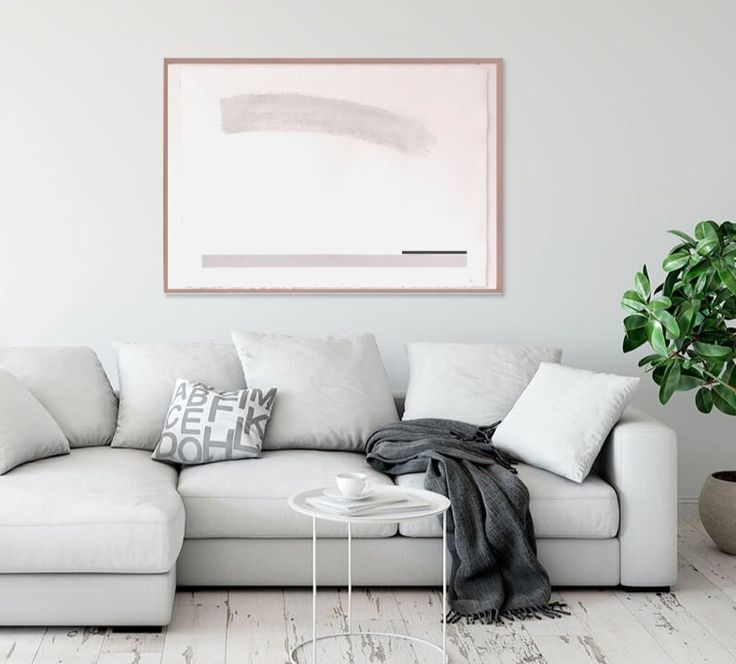
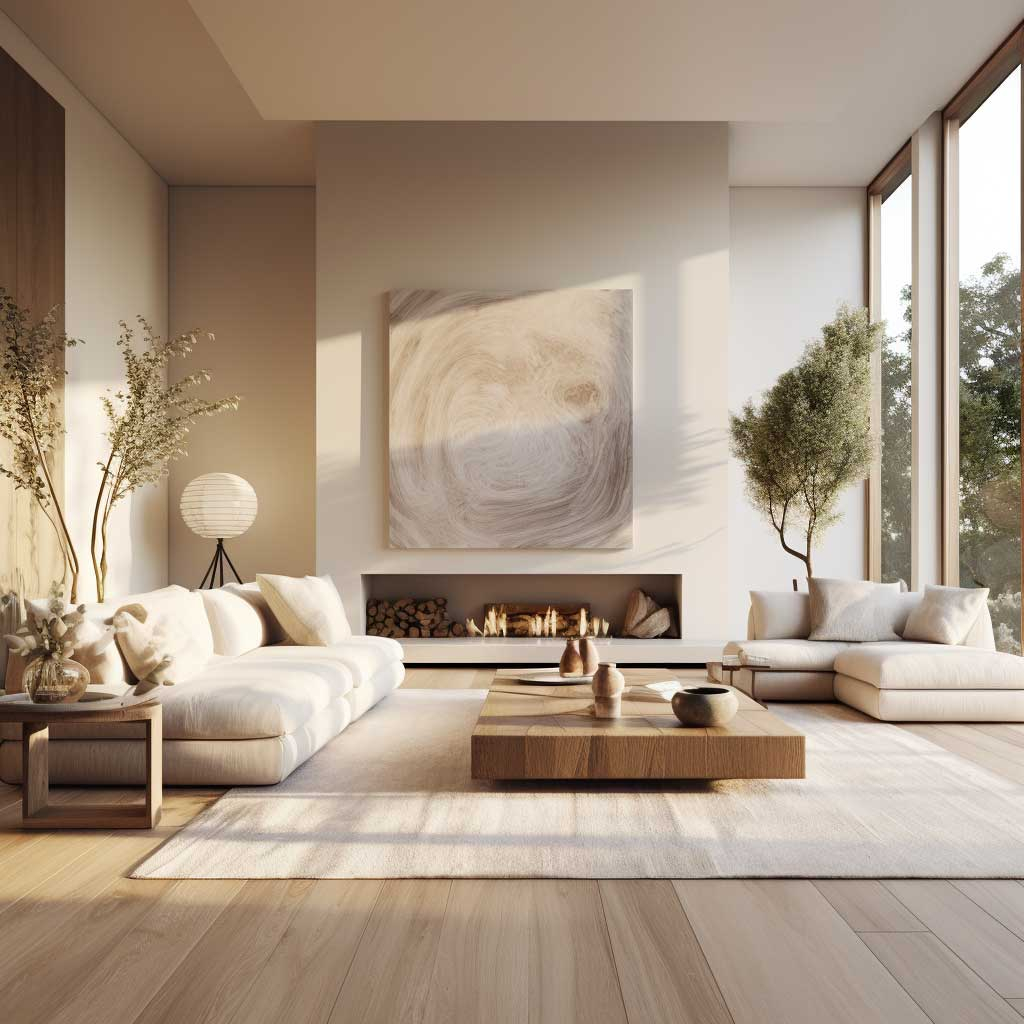
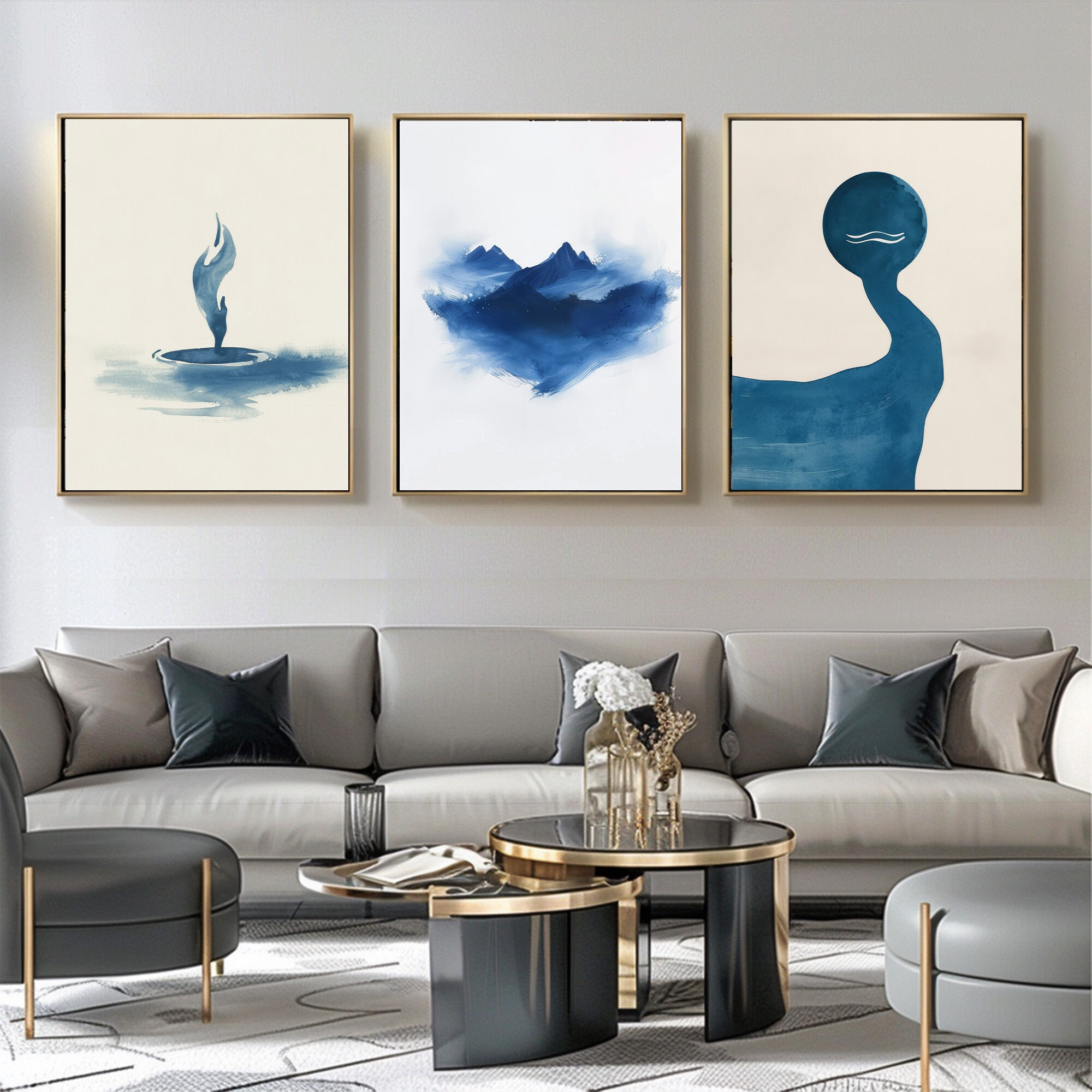
The relationship between the artwork and the furniture zone beneath it is governed by strict proportional thresholds. When styling a massive green abstract above a sofa, a credenza, or a structural fireplace, the canvas should generally span between 60 to 80 percent of the furniture piece’s total width. If the art is too narrow, the furniture anchors look clunky and unmoored, floating awkwardly beneath a postage stamp of color. If the artwork exceeds the furniture width without adequate breathing room, it visually crushes the seating arrangement, making the room feel top-heavy and defensively crowded.
Architectural sightlines also dictate where the composition’s focal weight must sit. If a large green abstract features a heavy, dark emerald mass concentrated in the lower third of the canvas, it grounds the room, creating a sense of tectonic stability. If that same dark mass is accidentally hung too high or inverted, the room instantly feels unsettling, as if a storm cloud were pressing down on the inhabitants’ heads. Practitioners spend hours dry-fitting cardboard mockups at actual scale, walking the perimeter of the room at different times of day to observe how entry-point sightlines interact with the horizon lines and gestural weight of the green composition.
Methodical Framework for Sourcing, Sizing, and Positioning Monumental Art
Executing a large-scale art installation successfully is a rigorous, multi-step engineering and design process rather than a spontaneous weekend styling project. Professional studios rely on a repeatable methodology to ensure that a monumental green abstract integrates seamlessly into the spatial ecology of a luxury interior.
- Step 1 (Architectural Audit and Light Mapping): Evaluate the room’s primary light sources, window orientations, and lumen levels across morning, midday, and evening hours to determine whether the green tones should lean warm (olive/chartreuse) or cool (sage/pine).
- Step 2 (Proportional Sizing Calculations): Measure the target wall and the furniture anchor beneath it, ensuring the canvas width falls squarely into the 60 to 80 percent rule of the furniture span while leaving at least 12 to 18 inches of exposed drywall frame on all sides.
- Step 3 (Compositional Architecture Selection): Choose an abstract style whose internal structure matches the room’s lines—opting for soft, atmospheric color-field greens for spaces with harsh architectural angles, or bold, linear gestural strokes for rooms with organic, soft furnishings.
- Step 4 (Substrate and Framing Logistics): Verify elevator dimensions, hallway clearance, and structural wall stud locations before ordering; canvas frames exceeding six feet often require heavy-duty French cleats and reinforced stretcher bars to prevent warping.
- Step 5 (Dry-Fit and Illumination Tuning): Tape out the exact dimensions on the wall using painter’s tape for 48 hours to live with the scale before hanging, followed by positioning adjustable art lights with a 3000K color temperature to render the green pigments accurately.
Navigating Structural Pitfalls and Field-Tested Workarounds
Scaling up brings a host of invisible structural and aesthetic hazards that can derail an entire interior design scheme. Recognizing these failure points before the drill touches the drywall saves thousands of dollars in ruined canvas and damaged walls.
- Pitfall 1 (The Floating Postage Stamp Effect): Choosing a canvas that is too small for a double-height wall, leaving vast expanses of dead drywall around the piece. Workaround: Grouping smaller panels into a cohesive diptych or triptych, or commissioning a custom oversized canvas that respects the 60-80% furniture width rule.
- Pitfall 2 (Monochromatic Camouflage): Matching the green abstract too perfectly to the room’s existing green upholstery, curtains, and accent walls, causing the art to disappear entirely. Workaround: Introduce strong contrasting undertones in the painting, such as raw umber, ochre, or stark white brushwork, to separate the art from the architectural background.
- Pitfall 3 (Ignoring Structural Wall Capacity): Hanging a massive 90-pound oil painting on hollow drywall without locating studs or using heavy-duty toggle anchors, leading to sagging or wall failure. Workaround: Always anchor large-scale works directly into wooden or metal studs using heavy-duty steel French cleats rated for double the canvas weight.
- Pitfall 4 (The Glare Trap): Placing a high-gloss varnished or glass-framed green canvas directly opposite a floor-to-ceiling glass wall, resulting in blinding daylight reflections. Workaround: Opt for matte, unvarnished acrylic mediums or non-reflective museum glass to diffuse external glare while preserving color saturation.
- Pitfall 5 (Compositional Mismatch with Room Geometry): Hanging a vertical painting in a room with low, oppressive ceilings, making the ceiling feel even lower. Workaround: Restrict choices to horizontally oriented abstract compositions that elongate the room’s lateral sightlines and trick the eye into perceiving expanded width.
The Long-Term Psychological and Economic Value of Scaled Green Art
Investing in monumental abstract art is rarely a short-term stylistic whim; it is a permanent architectural upgrade that reshapes the psychic signature of a building. Green, in all its manifold abstract expressions, occupies a unique space in contemporary interior wellness design. As urban density increases and indoor environments become increasingly digitized and synthetic, large-format green compositions act as visual proxies for the natural world. Biophilic design principles demonstrate that exposure to natural color spectrums—even in abstract, non-representational forms—reduces cortisol levels, lowers heart rates, and restores cognitive fatigue in high-stress work or living environments.
From an asset valuation perspective, oversized original art functions differently than mass-produced decor. Large-scale canvases require master-level execution from artists who can maintain compositional tension, brushwork integrity, and tonal harmony across massive expanses without the work falling apart visually from a distance. When a collector or homeowner invests in a properly scaled green abstract that anchors a primary living zone, they are purchasing a permanent anchor for the room’s color story. Interior design trends come and go—neutral sofas are reupholstered, rugs are swapped, and accent pillows rotate with the seasons—but a meticulously chosen, monumental abstract green canvas remains the enduring heart of the space, dictating the mood and maturity of the interior for decades.
Masterclass Takeaways for Integrating Monumental Green Art
To synthesize the core lessons of scaling abstract green compositions, designers and homeowners must treat the artwork not as an afterthought accessory, but as the primary emotional and structural engine of the room.
- Prioritize Scale Over Subject: Always let the architecture and furniture dimensions dictate the canvas size before falling in love with a specific color shade.
- Respect the Light: Test how natural light hits the green pigments throughout the day to prevent olive tones from looking muddy or emerald tones from glowing aggressively.
- Establish Visual Anchors: Use framing, hanging height, and furniture width ratios to ground the piece so it feels inextricably connected to the room rather than pasted onto the wall.
- Embrace Contrast: Ensure the green composition features sufficient tonal variation and undertones to prevent it from blending into monochromatic oblivion.
The journey of scaling abstract green compositions for large interiors is ultimately an exercise in spatial empathy. It requires stepping back from the immediate gratification of a small, charming color swatch and imagining how that color will behave when it occupies a commanding physical presence in your daily life. When done right, a monumental green abstract does not merely decorate a wall—it recalibrates the air in the room. It offers a place for the eye to rest, a visual horizon to wander across during a quiet morning, and a grounding anchor when the rest of the world feels dizzying and loud.
As architectural spaces continue to evolve toward open-plan minimalism and biophilic integration, the demand for sophisticated, large-format art will only deepen. Approach your next scaling project not with rigid formulas, but with a sensitivity to light, weight, and human emotion. Let the canvas breathe, respect the architecture that cradles it, and allow the quiet power of monumental green to transform your interior landscape.