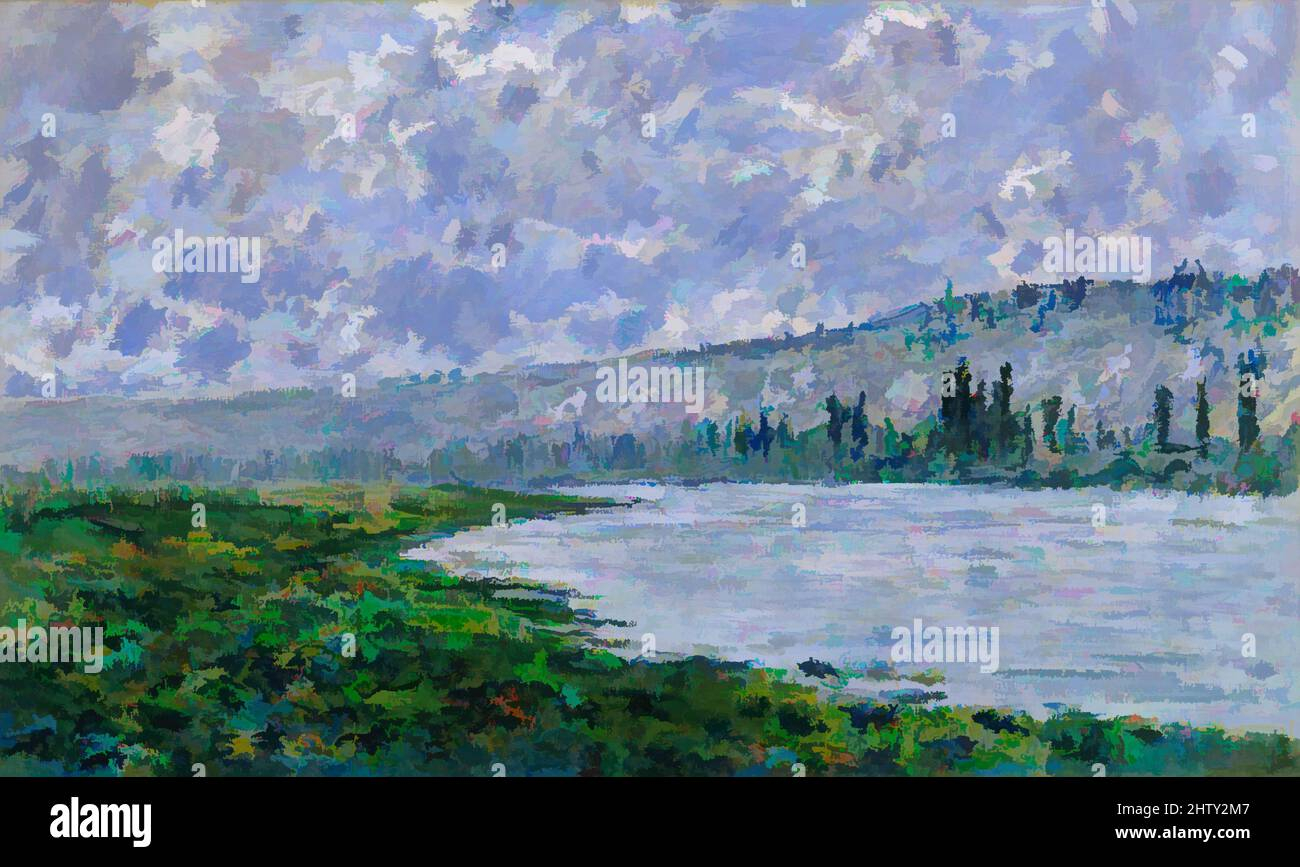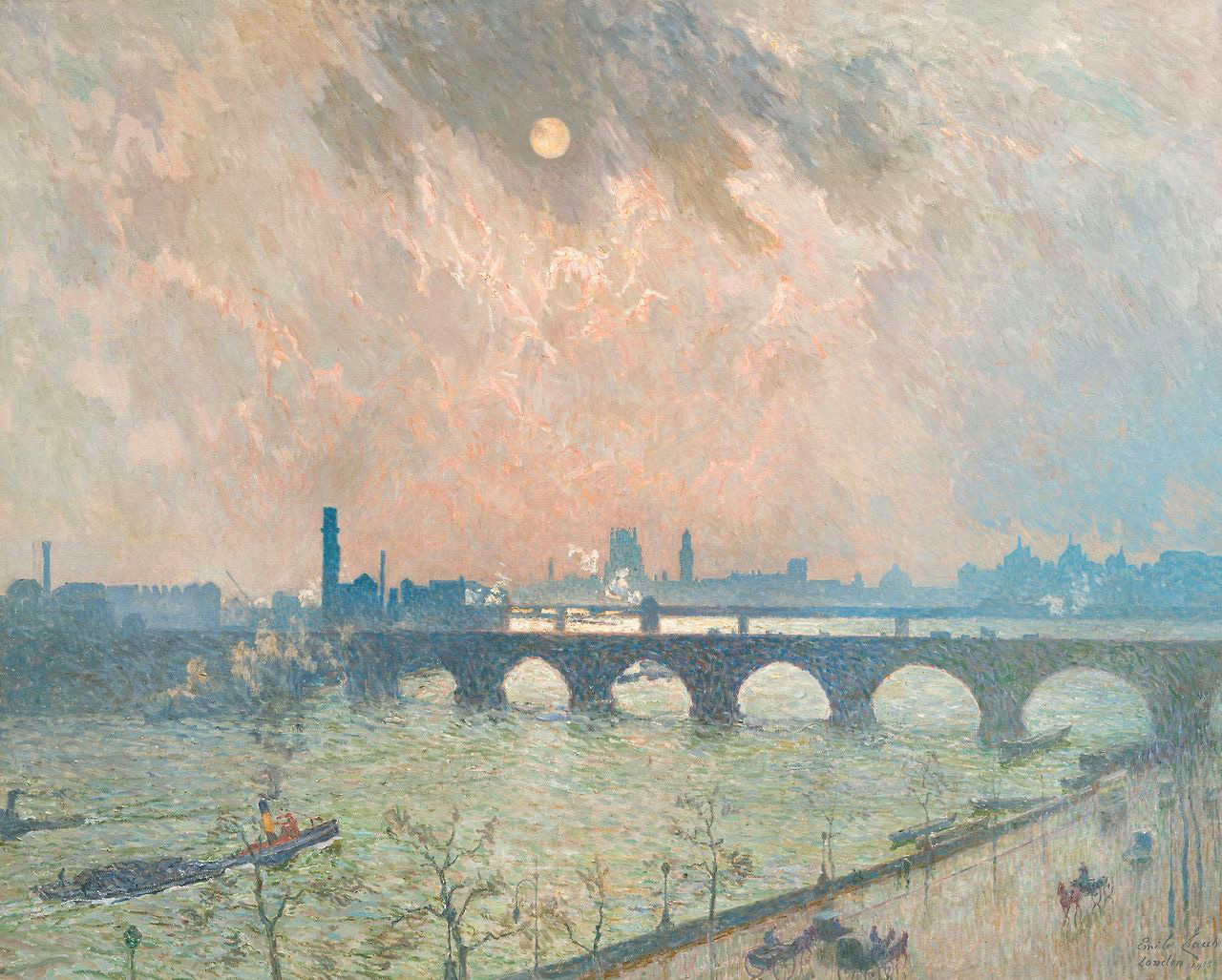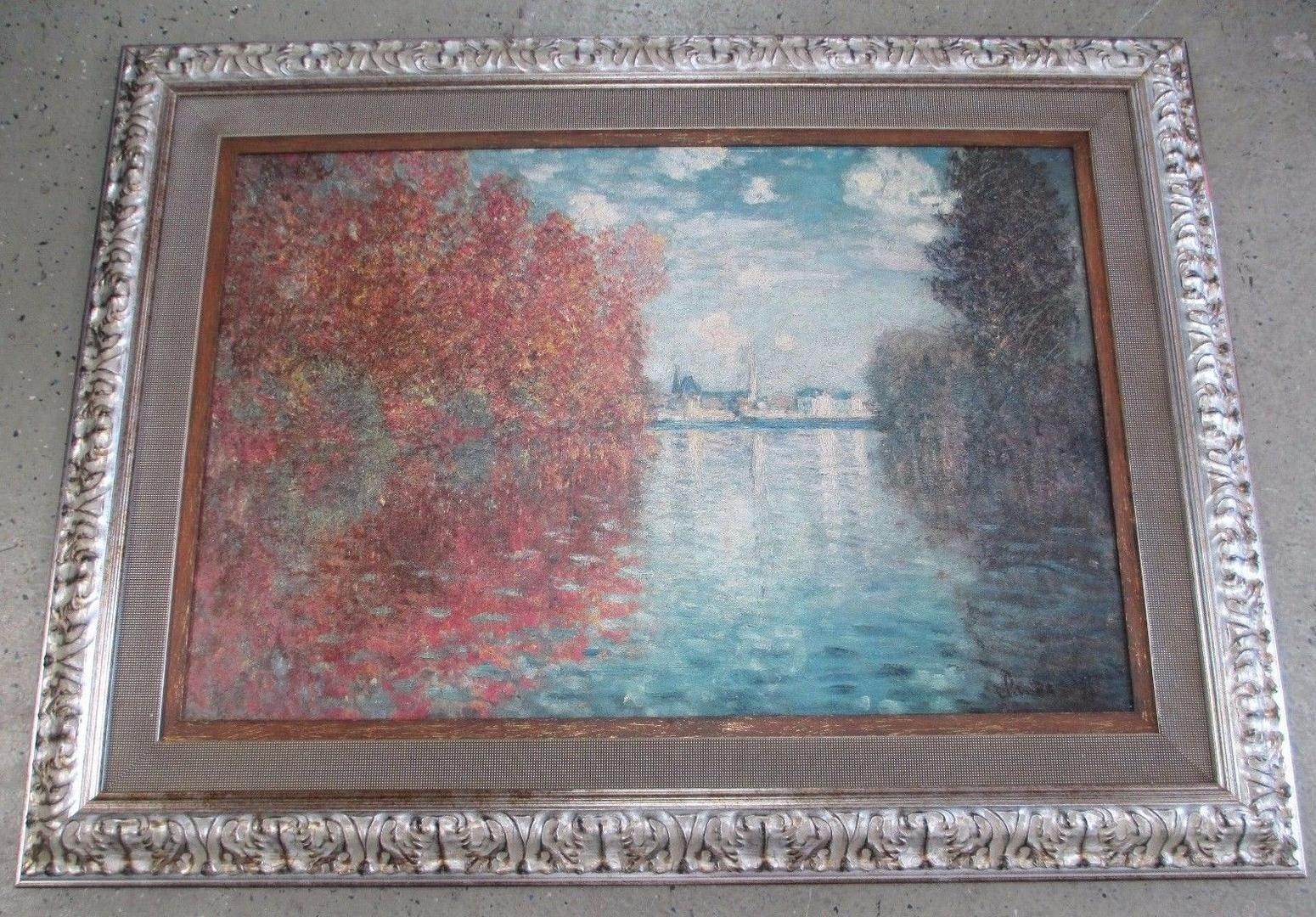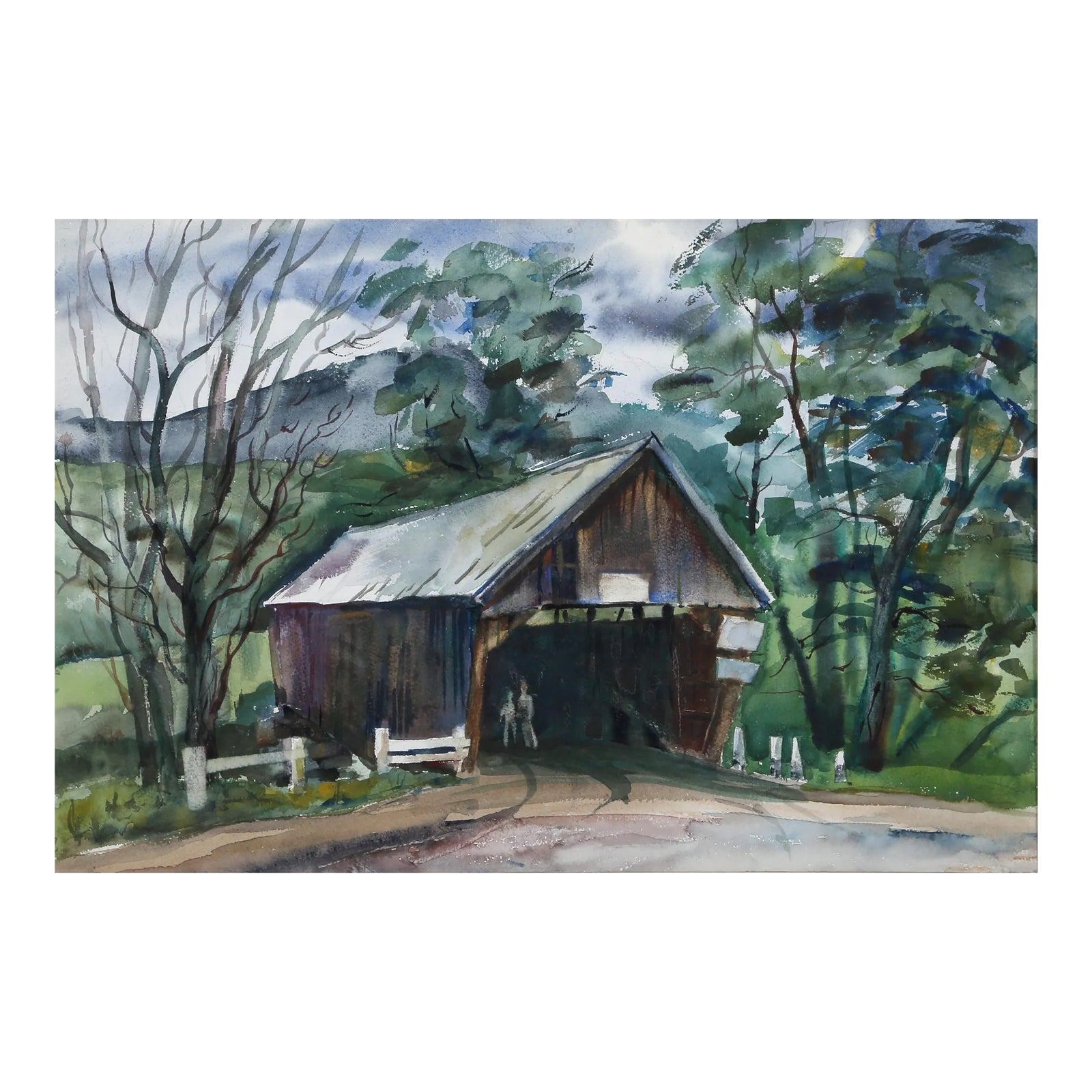
The North Atlantic wind howls across the chalk cliffs of Normandy, carrying the sharp, briny scent of decaying kelp, damp sand, and freezing saltwater. Standing on the pebbled shore at low tide, the ocean has retreated hundreds of yards, leaving behind a scarred, glistening expanse of slick ledges, shallow tidal pools, and exposed rocks. This is not the postcard-perfect expanse of blue water favored by academic painters of the Second Empire. It is raw, muddy, chaotic, and aggressively physical.
In the autumn of 1864, a twenty-three-year-old Claude Monet found himself standing on this exact type of treacherous coastal shelf. Armed with heavy wooden easels, lead-white tubes of oil paint, and stiff hog-bristle brushes, the young art student was fighting for his professional life. He was desperate to make a splash at the upcoming Paris Salon—the monolithic arbiter of artistic success that could make or break an aspiring career. Yet instead of painting mythological heroes or neoclassical allegories, Monet stared down at the retreating tide, watching how the exposed seabed laid bare the hidden architecture of the earth.
What low tide reveals about Claude Monet and his breathtaking 1864 coastal masterpiece, La Pointe de la Hève at Low Tide, goes far beyond a simple exercise in naturalistic realism. It exposes the tension between an ambitious young artist conforming to establishment expectations and a burgeoning visionary eager to tear down the rules of academic painting. The receding water acted as a natural X-ray machine, stripping away the romantic illusions of the deep ocean to reveal structural realities, temporal shifts, and atmospheric truths that would eventually birth Impressionism.
The Academic Crucible and the Pressures of the 1865 Paris Salon
Long before he was painting water lilies in the sun-drenched sanctuary of Giverny, Monet was a hungry, struggling bohemian navigating the rigid hierarchy of the Parisian art world. In 1864, the Salon was the singular gateway to institutional patronage, commissions, and critical acclaim. To survive financially and build a reputation, a young painter needed to produce works that appealed to conservative juries who favored grand historical narratives, hyper-polished finishes, and dark, bitumen-heavy palettes. Monet knew these rules intimately, having studied under the academic painter Charles Gleyre alongside future innovators like Pierre-Auguste Renoir and Alfred Sisley.
When Monet packed his canvas and traveled to the Normandy coast near Le Havre to paint La Pointe de la Hève, he understood the high stakes. The painting had to be safe enough to pass the grueling vetting process of the Salon jury, yet bold enough to satisfy his personal obsession with outdoor light and mutable weather. This duality explains why his 1864 coastal works sit at a fascinating historical crossroads. They are grounded in the traditional composition methods of the Hudson River School or seventeenth-century Dutch marine painters, utilizing strong foreground anchors, framing devices, and receding perspective lines that pull the viewer’s eye toward a distant horizon.
Yet, even within this conventional framework, the rebellious seeds of modernism were germinating in the mud and wet sand. Monet did not paint a generalized, idealized coastline; he painted a specific, geographically identifiable headland battered by real weather and dictated by the precise mechanics of the lunar cycle. The low tide forced him to abandon studio generalizations in favor of direct, empirical observation. He had to record how wet limestone cliffs reflected the steel-grey light of an overcast sky, and how the retreating surf left linear ripples of foam and silt across the flats.
Decoding the Anatomy of the 1864 Seascape and Tidal Mechanics
To truly understand La Pointe de la Hève at Low Tide, one must examine how Monet translated the complex physics of a coastal ebb tide onto a static, two-dimensional woven fabric. At low water, the ocean ceases to be a uniform wall of blue and becomes a dynamic ecosystem of exposed geology. The dark, slippery rocks jutting out of the mud are not merely decorative elements; they function as geographical markers that anchor the expansive canvas, dividing the pictorial space into clean, horizontal bands of earth, water, and sky.
Monet employed a sophisticated handling of perspective, utilizing the receding wet sand and exposed breakwaters to create a powerful sense of depth. Much like his later explorations of Trouville and Pourville, the composition relies on lines that converge toward a distant vanishing point, often marked by a tiny, silhouetted sailboat or the faint white beam of a lighthouse. This linear recession creates an immersive psychological effect, making the viewer feel as though they are standing on the damp shoreline, feeling the cold Atlantic breeze sting their cheeks as the water pulls away from their boots.
Furthermore, the color palette of this 1864 masterpiece reflects a rigorous study of atmospheric neutralization. Eschewing the vibrant, unblended prismatic colors of his later 1870s output, Monet here relied on earthy siennas, deep indigos, ochres, and muted slate-greys. These somber tones were necessary to pass muster with the Salon jury, but they also served an authentic purpose: they accurately represented the harsh, overcast light characteristic of the northern French coast. By rendering the shallow tidal pools as mirrors that captured the ambient light of the heavy clouds above, Monet proved that even a mudflat could possess profound chromatic richness.
Mastering Coastal Fieldwork Through Rigorous Observation and Technique
Painting on location—en plein air—along the volatile Normandy shore in the mid-nineteenth century was a grueling physical endurance test rather than a romantic artistic exercise. Sudden rain squalls could ruin a canvas in seconds, shifting tides threatened to swamp heavy equipment, and the relentless coastal winds blew sand directly into wet oil paint. Monet approached these harsh field conditions with the precision of a scientist and the grit of a field laborer, developing a methodical workflow to capture transient atmospheric moments before the tide turned.
- Step 1 (Site Selection and Tidal Alignment): Research local tide tables and scout the coastline during dead low water to identify structural points of interest, such as exposed reef ledges, breakwaters, or unique cliff formations that provide strong geometric anchors.
- Step 2 (Rapid Structural Priming and Block-In): Establish the horizon line and primary perspective vanishing points quickly using thin washes of earth tones, mapping out the large masses of land, water, and sky before the lighting conditions shift.
- Step 3 (Capturing the Intertidal Zone): Focus heavily on the wet sand, reflecting pools, and exposed rocks, utilizing horizontal brushstrokes to emphasize the flatness of the receding water and vertical or diagonal marks for jagged stones.
- Step 4 (Modulating Atmospheric Light): Mix localized grey and ochre tones on the palette to represent filtered cloud cover and mist, ensuring that the transition between sea and sky remains soft and cohesive.
- Step 5 (Adding Scale and Human Presence): Introduce small, anonymous figures—such as local fishermen, gatherers, or travelers—sparingly to establish human scale against the overwhelming, immense geometry of the natural landscape.
This methodical yet responsive approach allowed Monet to synthesize the grand tradition of marine painting with the immediate demands of direct optical perception. Every brushstroke was a decision made under pressure, dictating how light bounced off wet seaweed or how foam dissolved into a receding wavelet.
Navigating the Traps of Conventional Seascape Painting
Many contemporary artists and historical painters attempting coastal landscapes fall into predictable traps that sap their work of vitality and structural integrity. Monet’s early 1864 experiments offer critical lessons in avoiding these common pitfalls through rigorous observation and disciplined technical choices.
- Pitfall 1 (Static and Unrealistic Waterlines): Painters often render the ocean as a static horizontal band rather than a living, receding force. The Practitioner Workaround: Study actual tidal movements to see how water leaves behind moisture tracks, foam lines, and sediment channels that indicate direction and flow.
- Pitfall 2 (Over-Smoothing the Atmosphere): Blending the sky and sea until all texture is lost destroys the atmospheric tension of the coast. The Practitioner Workaround: Retain visible, confident brushwork in the cloud formations to convey movement, moisture, and wind pressure.
- Pitfall 3 (Ignoring Geological Truth for Compositional Drama): Exaggerating cliff heights or rock formations to make a scene more exciting often results in a contrived, theatrical look. The Practitioner Workaround: Respect the actual topography of the site; the natural asymmetry of real rock ledges provides far more compelling visual rhythm than invented shapes.
- Pitfall 4 (Monochromatic Mud Flats): Rendering exposed sand and mud as flat, uniform brown areas creates dead zones on the canvas. The Practitioner Workaround: Introduce subtle undertones of violet, green, and pale yellow into wet earth to reflect the complex sky conditions above.
- Pitfall 5 (Relying Solely on Studio Memory): Trying to finish a complex coastal painting indoors without reference to real outdoor lighting leads to artificial color relationships. The Practitioner Workaround: Commit to completing the foundational color blocks directly on site during the matching tidal window.
By treating the landscape as a living laboratory rather than a static backdrop, Monet bypassed the artificial conventions that trapped many of his academic contemporaries, ensuring his early works retained an authentic pulse of life.
The Broader Historical Impact and the Evolution Toward Pure Impressionism
The journey that began on the mudflats and pebbled beaches of Normandy in 1864 ultimately transformed the trajectory of Western art history. La Pointe de la Hève at Low Tide was successfully accepted into the 1865 Paris Salon, alongside its companion piece, The Mouth of the Seine at Honfleur. While the works received polite, muted notices from critics rather than revolutionary acclaim, the experience cemented Monet’s absolute commitment to painting the natural world outdoors.
As the decades progressed, Monet returned repeatedly to the Normandy coast—visiting Pourville, Trouville, and Les Petites-Dalles—each time pushing further away from the academic constraints that bound his 1864 output. The dark, earthy palettes of his youth gave way to vibrant, unmixed pigments applied with rapid, broken touches. Yet, the core fascination remained identical to what he discovered at age twenty-three: the relentless, rhythmic heartbeat of the ocean and the way low tide strips away human artifice to reveal the raw, elemental bones of the earth.
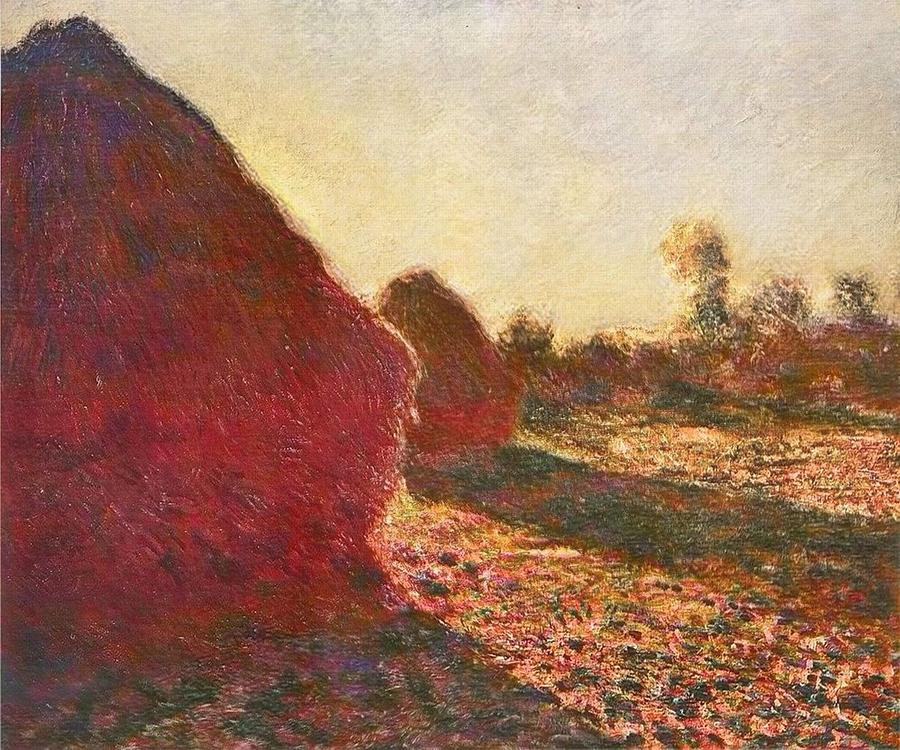
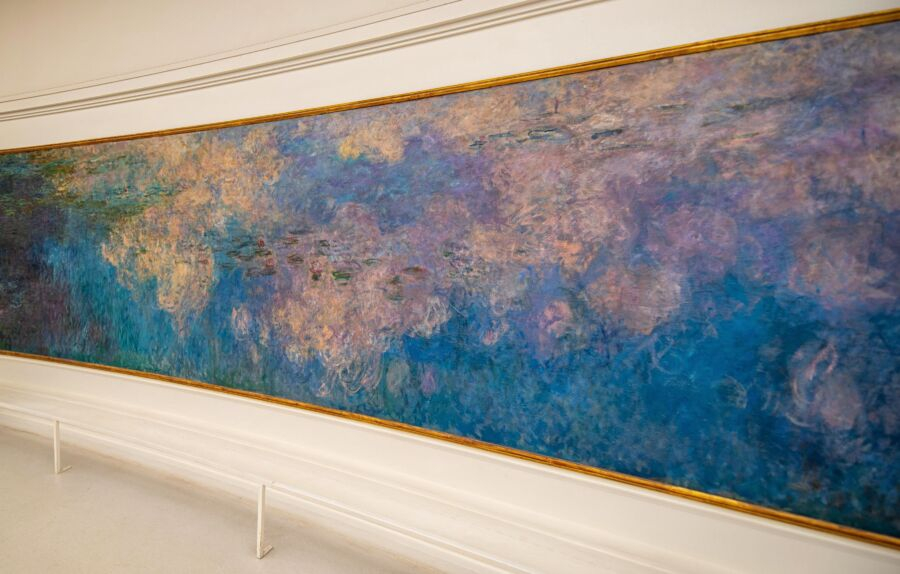
This sustained engagement with coastal environments provided Monet with the empirical knowledge necessary to master light, reflection, and atmosphere. When he eventually moved on to serial painting in the 1890s—capturing the haystacks, Rouen Cathedral, and water lilies under shifting conditions of dawn, noon, and dusk—he was simply applying the lessons learned on those treacherous, receding Normandy mudflats decades earlier. The ocean had taught him that nothing in nature is ever static, and that beauty resides entirely in the transient, unrepeatable present.
Practical Frameworks for Modern Artists and Art Historians
For contemporary painters seeking to apply Monet’s early nineteenth-century methodologies to modern practice, or for art historians analyzing the mechanics of his breakout era, a structured framework is essential for translating these historical insights into actionable study.
- Framework 1 (Empirical Observation Over Formula): Prioritize direct, on-site study of natural phenomena over photographic reference, ensuring that your work captures environmental pressures like wind, temperature, and humidity.
- Framework 2 (Structural Geography as Composition): Use permanent natural elements—such as rock ledges, cliffs, and low-tide lines—as strong architectural frameworks to organize complex, chaotic outdoor spaces.
- Framework 3 (Tonal Harmony Under Overcast Skies): Master the subtle interplay of greys, ochres, and muted earth tones before attempting high-key prismatic color experiments.
- Framework 4 (Temporal Awareness in Art): Treat time as a physical medium in your paintings, using receding water, shifting shadows, and changing cloud cover to anchor your work in a specific temporal moment.
Adopting these core principles allows creators and scholars alike to appreciate the sheer intellectual and physical rigor required to revolutionize visual art from the ground up.
Standing on the Normandy shore today, looking out toward the horizon where the English Channel meets the sky, the ghosts of 1864 remain vividly present. The cliffs of La Pointe de la Hève have eroded slightly over the decades, the shipping lanes carry modern container ships instead of wooden sailing craft, and the tourists wear waterproof Gore-Tex instead of wool coats and top hats. Yet, the fundamental interaction between land, water, and lunar gravity remains entirely unchanged.
Claude Monet understood that to capture the truth of the world, one must be willing to walk out into the mud when the water recedes, facing the raw, unfiltered elements without illusion or compromise. La Pointe de la Hève at Low Tide stands as a monumental testament to this fearless pursuit of reality. It bridges the gap between the cautious student and the radical master, proving that true innovation often begins not in the comfort of a heated studio, but out on the freezing, windswept shores where the ocean meets the earth.